Actualia (engl.) · Conference Report

13th International PhD School on Plant Development

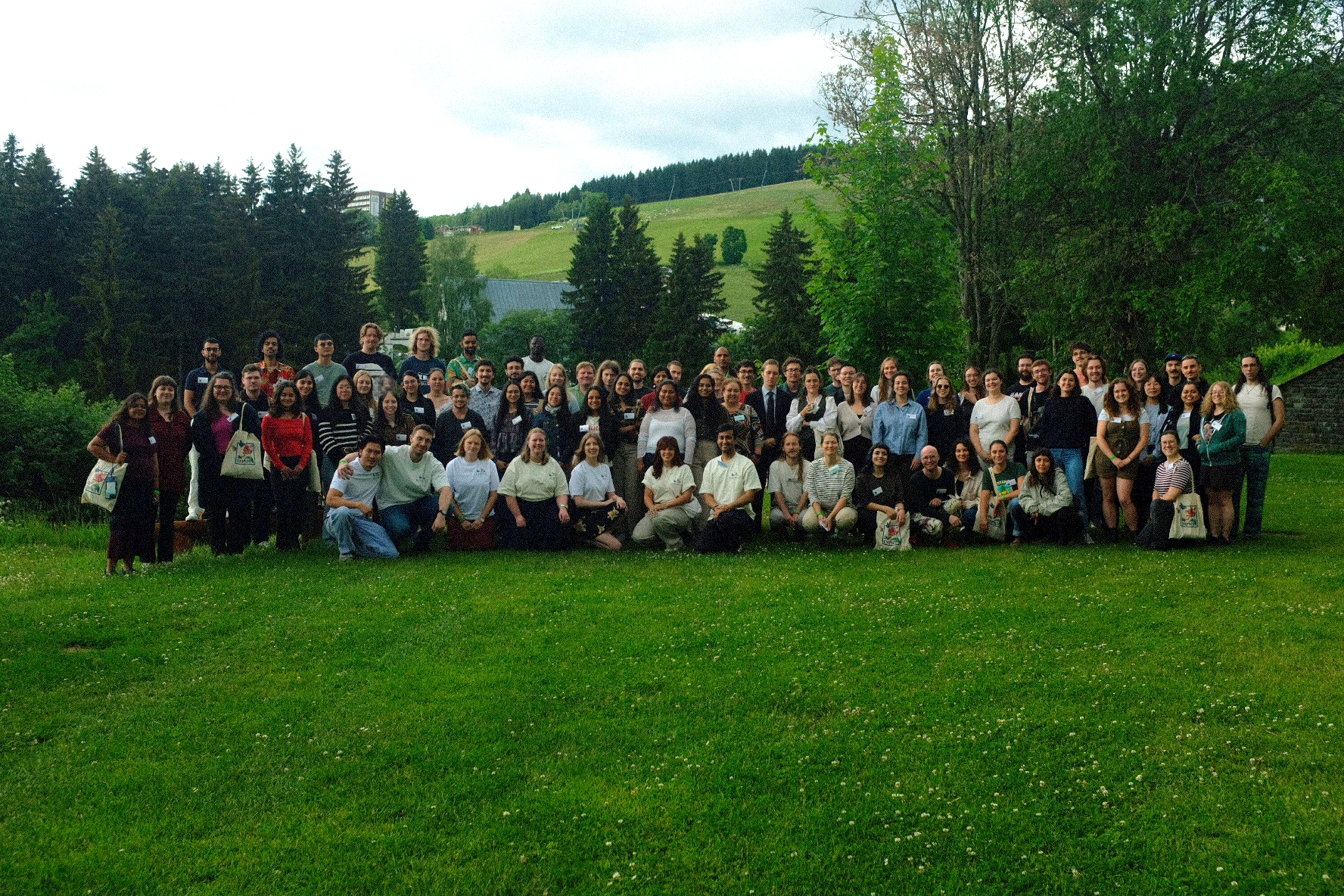
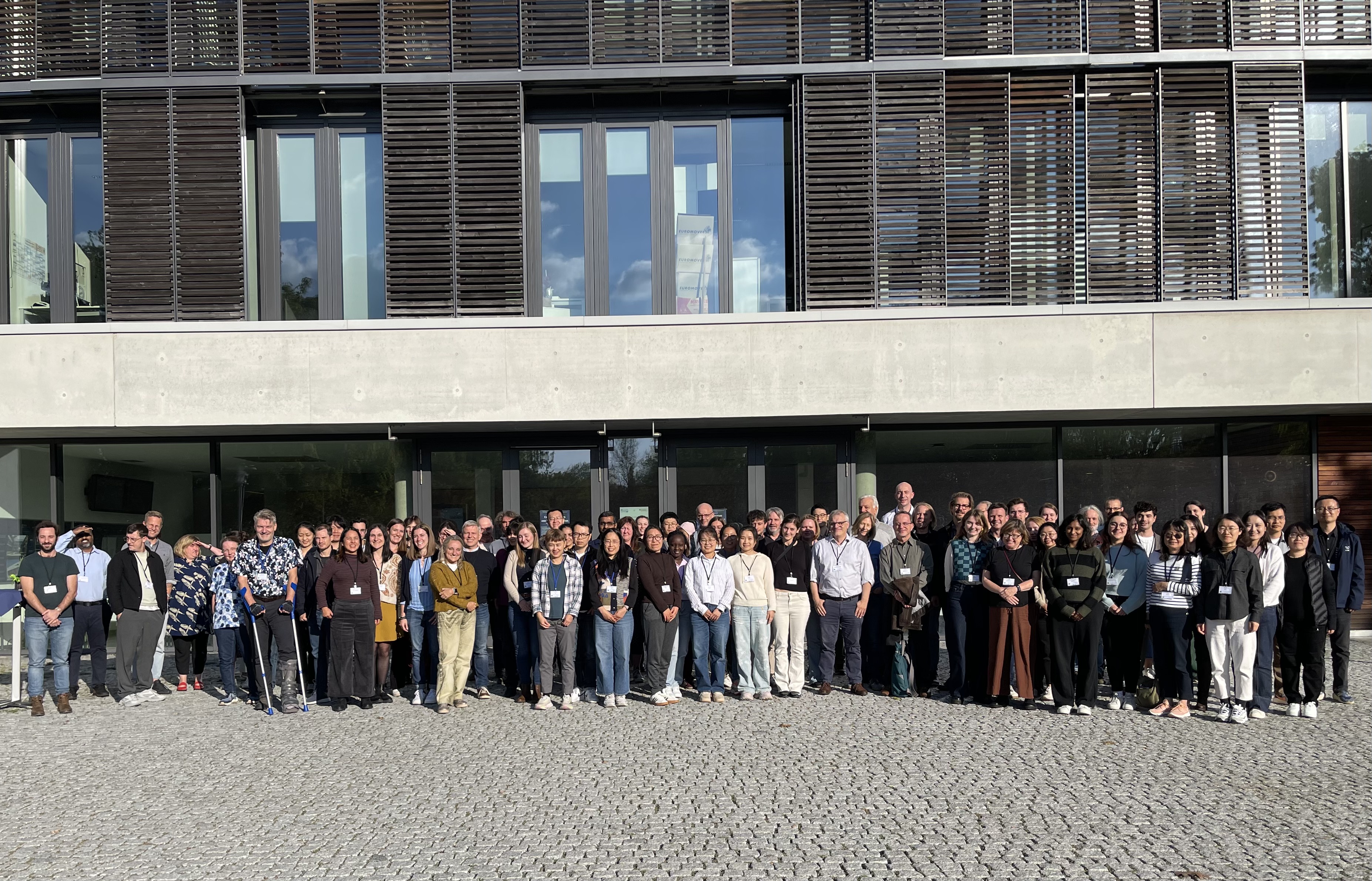
Participants of the 13th PhD School on Plant Development in the gardens of Kloster Neustadt, the venue of the PhD school. Photo: Moritz Nowack

The 13th International PhD School on Plant Development gathered 45 Early Career Researchers (ECR) and 13 senior scientists. It took place 23-25 September 2026 at Kloster Neustadt in Neustadt an der Weinstrasse, Germany. Organized by Moritz Nowack (VIB Ghent), Michael Raissig (University of Bern), and Arp Schnittger (University of Hamburg), the meeting relaunched this long-standing event at a new venue after the disruption of COVID-19 and the closure of its former site in Retzbach. For some of the organisers, reviving the school carried special meaning: Michael Raissig attended its very first edition as a first-year PhD student in 2008.

read more
Actualia (engl.) · Promoting young researchers · Conference Report

Eduard Strasburger-Workshop: Complexome Profiling in Plants - Exploring Organellar Protein Networks

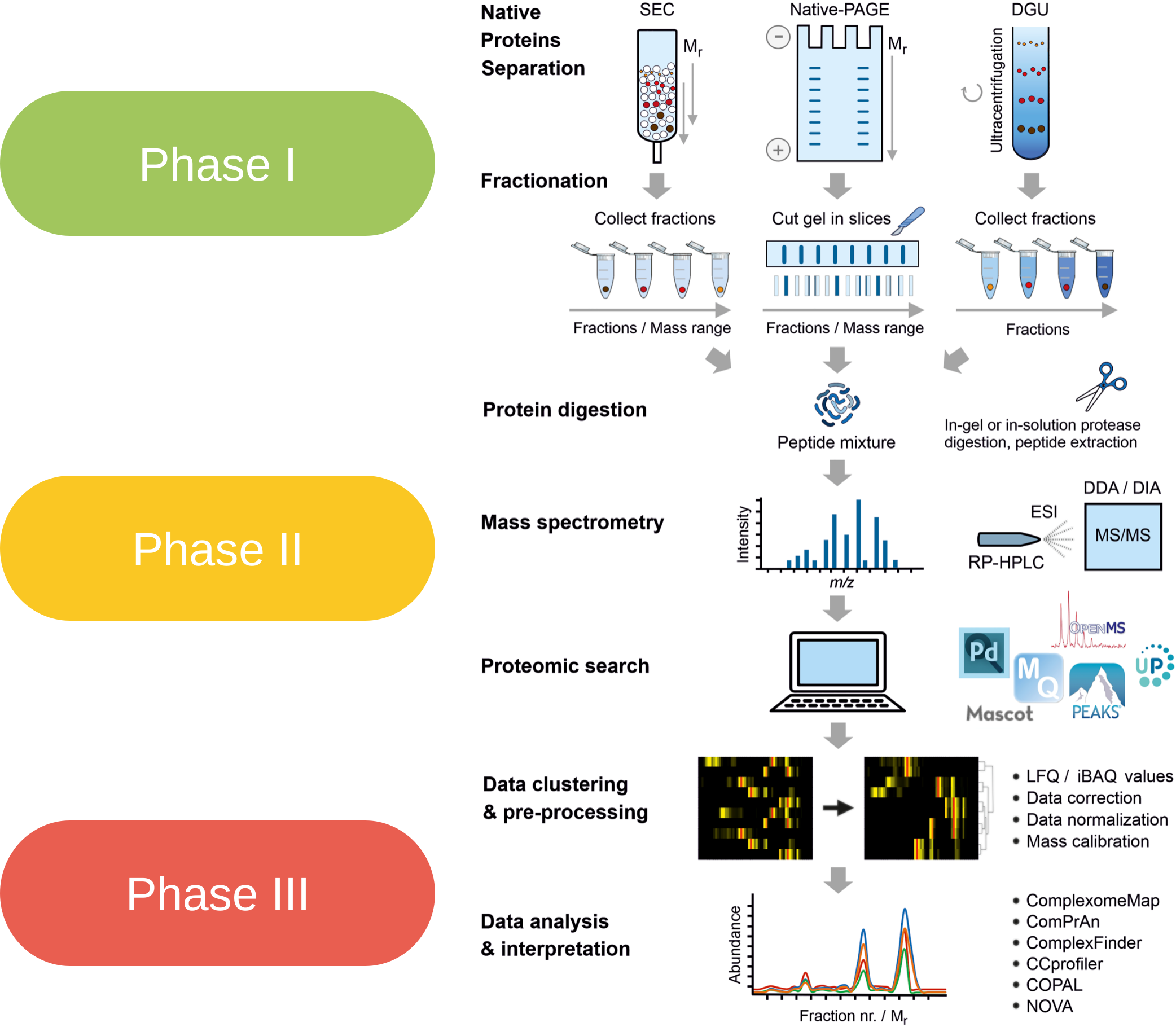
Figure 1: Decoupled workflow of complexome profiling. Phase I (Local preparation): Native separation (via SEC, Native-PAGE, or DGU) and fraction collection are performed on site using fresh biological material. Stabilized fractions are then shipped to a specialized facility. Phase II (Outsourced MS measurement): In-gel or in-solution digestion, LC-MS/MS analysis, and initial database searching are conducted by the MS core facility. Phase III (Local data analysis): Pre-processing, normalization, profile clustering, and biological interpretation of complexome data are carried out independently by the participants. Figure adapted by Nils Rugen from Cabrera-Orefice A, Potter A, Evers F, Hevler JF and Guerrero-Castillo S (2022) Complexome Profiling—Exploring Mitochondrial Protein Complexes in Health and Disease. Front. Cell Dev. Biol. 9:796128. doi: 10.3389/fcell.2021.796128. CC BY 4.0

DBG’s Eduard Strasburger Workshop “Complexome Profiling in Plants: Exploring Organellar Protein Networks” took place in September 2026 at Leibniz University Hannover. It provided nine early-career researchers from universities across Germany with intensive, hands-on training in comparative complexome profiling, spanning sample preparation and high-resolution native protein separation in the lab to the bioinformatic analysis and evaluation of huge datasets of organellar protein networks. It allowed participants to execute each step themselves and also left ample time to address detailed individual questions that the participants returned to their institutions with concrete solutions and ideas. Details are reported by the organisers, Dr Nils Rugen and Matthias Döring. 

read more
Actualia (engl.) · DBG

New statutes adopted and new board members elected

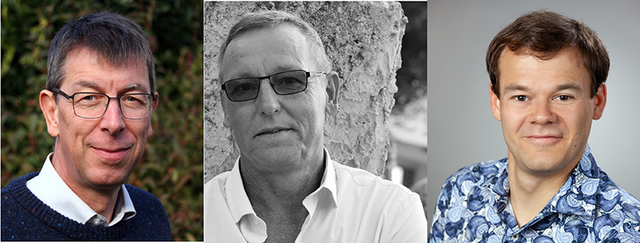
New persons in DBG’s board: Professor Andreas Meyer, Professor Dirk Becker, and Professor Jan de Vries (f.l.t.r.) will take over their offices starting in 2027. Photos and (c): Florian Schiller (left), 2 private

The new statutes of our DBG, which were sent to our members in May, were unanimously adopted during the General Assembly held on 7th September 2026 at Ruhr University Bochum. In these the Executive Board is expanded to include two new vice-presidential posts in the long term. As a result the first new vice-president had to be elected this time. Following the discharge of the incumbent Executive Board, the members elected Prof. Dr Andreas Meyer (University of Bonn) to the new vice-president position. At the same time, they elected Prof. Dr Dirk Becker (Julius Maximilian University of Würzburg) as their new treasurer, since after ten years in this office, Prof. Dr Raimund Tenhaken had decided not to stand for re-election. The present members of the Executive Board, Prof. Dr Andreas Weber, Prof. Dr Iris Finkemeier and Prof. Dr Boas Pucker, were re-elected as DBG’s President, Secretary General and Secretary, respectively. Prof. Dr Jan de Vries (Georg-August University of Göttingen) as incoming conference chair was newly elected as a member of the extended Board, replacing Prof. Dr Christopher Grefen. Dr Sophie de Vries (Georg-August University of Göttingen), the representative for early-career researchers, was also confirmed in her office. Some of the Section‘s spokespersons were newly elected during their section’s meetings (see the section pages for more details), and, in accordance with our statutes, their first spokespersons are ex officio members of the extended Board and were therefore not standing for (re-)election at our General Assembly.

Actualia (engl.) · DBG · Honorary Member

Karl-Josef Dietz becomes DBG’s new honorary member

President Andreas Weber (left) warmly congratulated Prof. Dr. Karl-Josef Dietz, the newly elected honorary member of the DBG, who was chosen unanimously. Photo: Minou Nowrousian

During our assembly on 7th September in Bochum, the DBG’s members present in the room unanimously voted to elect Karl-Josef Dietz (Bielefeld University) to become new honorary member. Nominated by our current Board, DBG President Professor Dr Andreas Weber highlighted Dietz’s many scientific achievements during the Botanik-Tagung, the International Conference of our German Society for Plant Sciences in Bochum: Dietz and his research team have significantly shaped our current understanding of redox regulation, photosynthesis, and the adaptation of plants to changing environmental conditions. To this end, Dietz has published more than 300 articles and received awards for his findings. Furthermore, the Bielefeld-based plant physiologist has actively served the scientific community for many years through his work in both national and international organizations, in the German Research Foundation (DFG) and as editor of scientific journals. Our society very much thanks Karl-Josef Dietz for his many years as spokesperson for our Section Plant Physiology and Molecular Biology (2003-2009) and, above all, for the eight years (2012-2019) during which he shaped and further developed our DBG as its president, as described in the laudatory speech delivered in Bochum.

Download laudatory speech
Actualia (engl.) · DBG

Medals for committed board members

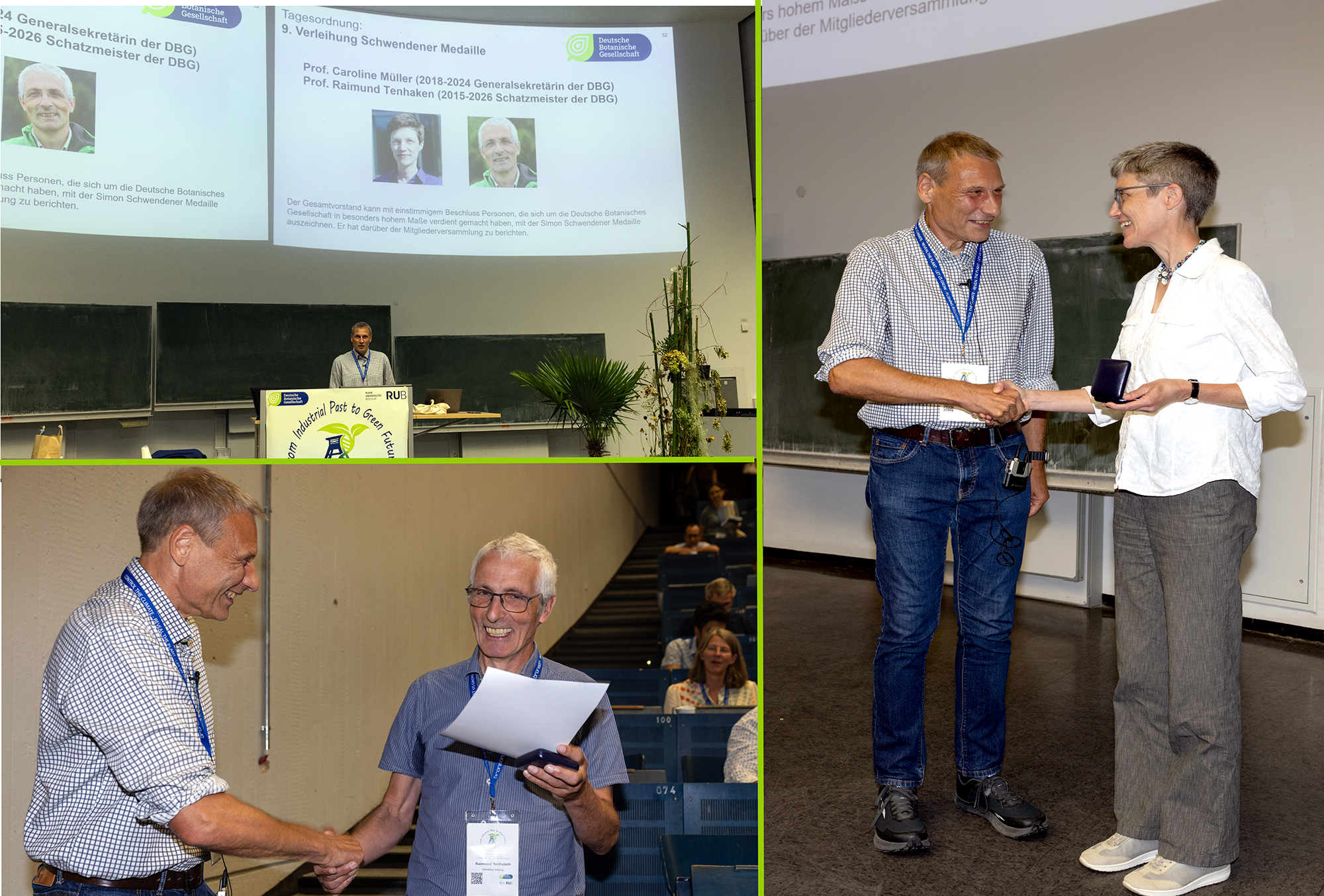
For their committed contributions to our learned Society president, Andreas Weber (left in each of the larger images), thanked Caroline Müller (right) and Raimund Tenhaken (bottom) with our Simon-Schwendener-Medals. Photos: Minou Nowrousian

Our former Secretary General, Prof. Dr Caroline Müller, and our long-term treasurer, Prof. Dr Raimund Tenhaken, were honoured by the president, Prof. Dr Andreas Weber: With the Simon Schwendener Medal the latter sincerely thanked them in the names of all member for their continuing support of our German Society for Plant Sciences (DBG) on the occasion of the member assembly at Ruhr-University Bochum, Germany, on 7th September. Caroline Müller (Bielefeld University) held the office of the Secretary General in the years 2018 to 2024 with exceptional commitment and her impressive efficiency. Since now ten years Prof. Dr Raimund Tenhaken (Salzburg University) is our treasurer and managed our finances conscientiously. The audience thanked both of them with a prolonged round of applause. Raimund Tenhaken also received applause and thanks from our organisation and the audience for the many years he also served on the board of DBG’s own Wilhelm Pfeffer Foundation, as its president, Prof. Dr Severin Sasso, pointed out in the general assembly.

more images
Actualia (engl.) · Internat. Botanik-Tagung · Promoting young researchers

Botanik-Tagung 2026: Poster Awards for ECRs

The ten awardees shared the stage after the awards ceremony with conference chair, Professor Christopher Grefen (left), and the president of the German Society for Plant Sciences, Professor Andreas Weber (right). Photo: Minou Nowrousian

From the more than 300 displayed scientific posters presented at Botanik-Tagung 2026, the International Conference of our German Society for Plant Sciences (DBG), the participants elected the ten best posters. The early career plant scientists (ECRs) were rewarded for their scientific work presented on the respective posters and received an endowment of 145 Euros reach, taking into account the foundation of our Society in the year 1882. The names of the awarded ECRs and the titles of the scientific posters they presented are summarized in a list. 

Names, titles, and photos
Actualia (engl.) · DBG · People and Careers

Nobel Prize for two members and discoverers of channelrhodopsins

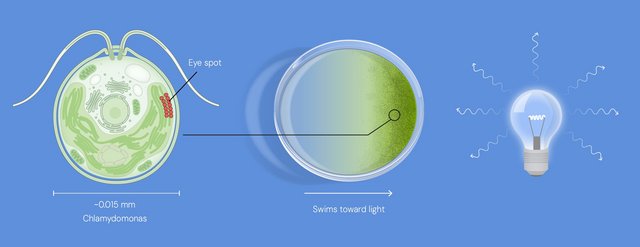
The tiny alga Chlamydomonas senses light using its eyespot, which allows it to orient itself towards light. Graph and (c): The Nobel Committee for Physiology or Medicine. Ill. Mattias Karlén

Biophysicist, phycologist, and DBG-member Professor Peter Hegemann (Humboldt University Berlin), the plant physiologist and member of our Section Phycology, Professor Georg Nagel (Würzburg University), together with Karl Deisseroth, Professor of Bioengineering and Psychiatry at Stanford University, jointly receive the 2026 Nobel Prize in Physiology or Medicine, as the Karolinska Institute in Stockholm announced yesterday. Hegemann and Nagel discovered the so-called channelrhodopsins, light-sensitive proteins, when they wanted to explain how the single-cell green alga Chlamydomonas senses light to move towards it. Together with Karl Deisseroth they developed the new field of optogenetics, in which these light-sensitive rhodopsins were inserted into the membranes of nerve cells. This enables to switch on and off those cells with light and to study nerve cells in living organisms and living brains. Our DBG congratulates Peter Hegemann, Georg Nagel and Karl Deisseroth to this well-deserved award. The Nobel Prizes will be presented on 10th December to the awardees, the anniversary of the death of Alfred Nobel, who established the prizes.

Details: Karolinska Institutet
Actualia (engl.) · DBG · Internat. Botanik-Tagung

Universities and scientific societies have the same missions

Professor Dr. Andreas Weber welcomed the participants and expressed his wish to keep non-commercial scientific meetings like ours affordable to meet the challenges that gave the conference its title "from industrial past to green future". Photo: Minou Nowrousian

In his opening speech of the Botanik-Tagung, International Conference of the German Society for Plant Sciences (DBG), our president, Professor Andreas Weber, made participants familiar with the Ruhr region and in detail with their traditional values, like hard work, solidarity, openness, and tolerance, to name a few, as well as with the people’s verbal directness common around the venue: Criticism and praise are expressed straightforwardly, candidly, and without frills. With this in mind Weber as president of one of the oldest botanical societies reminded us that scientific meetings like ours are important for the scientific community for exchanging ideas, academic networking, stirring new collaborations, and especially for launching and advancing the careers of early-career scientists (ECRs) like PhD students and postdocs. Therefore, it is crucial that those meetings are affordable, especially for researchers starting their academic careers. He put forward that meetings like our biannual conference are non-commercial, from scientists and for the scientific community, despite their organization becoming increasingly bureaucratic and expensive in recent years. Universities and scientific societies are part of the same academic ecosystem and should facilitate conferences with minimal registration fees for ECRs and scientists from less well-funded institutions to meet the challenges towards a greener and more sustainable future that gives our conference its title "From Industrial Past to Green Future".

Read whole welcome address (pdf)
Actualia (engl.) · Promoting young researchers

Science prizes for early career researchers at international Botanik-Tagung

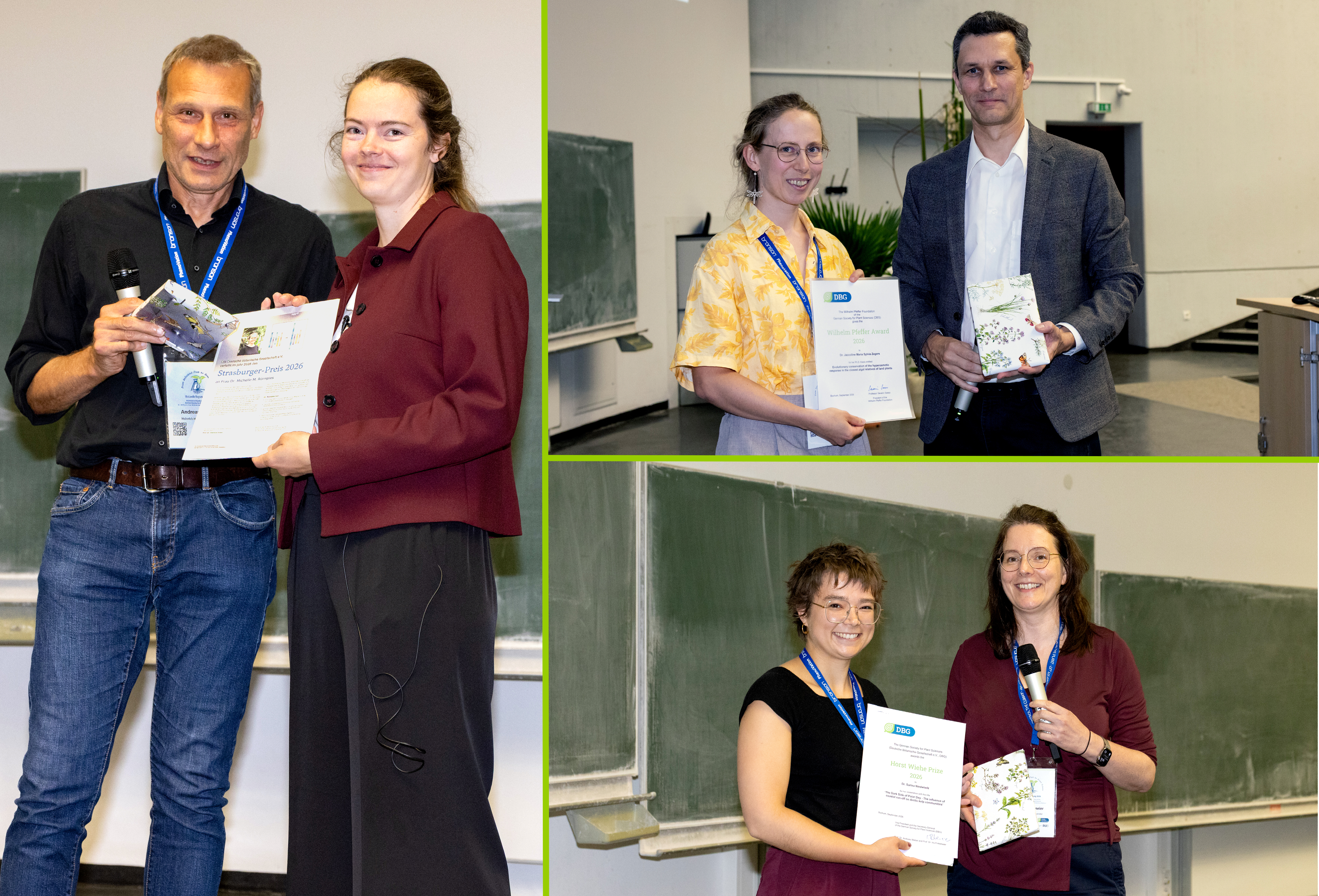
Dr Michelle Rönspies received the certificate of the award, sponsored by Springer-Spektrum Verlag, from DBG’s president, Prof. Andreas Weber (left). In addition to the award, Dr Jaccoline Zegers got the certificate from the president of DBG’s own Wilhelm Pfeffer Foundation, Prof. Severin Sasso (top right). Dr. Sarina Niedzwiedz received her science award from DBG’s Secretary General, Prof. Iris Finkemeier (bottom right). All awardees had been invited to DBG’s international conference in Bochum. All photos: Minou Nowrousian

During the International Conference of our German Society for Plant Sciences (DBG), the Botanik-Tagung, in Bochum, Germany, several early-career researchers received awards for their outstanding scientific achievements. Plant geneticist Dr Michelle Rönspies (Karlsruhe Institute for Technology, KIT) was awarded the Eduard Strasburger Prize for her paper published in Science. The PhD thesis of evolutionary biologist Dr Jaccoline Zegers (University of Göttingen) was honoured with the Wilhelm Pfeffer Prize; and the PhD thesis of macroalgae researcher Dr Sarina Niedzwiedz (University of Bremen) was awarded with DBG’s Horst Wiehe Prize. Each of the three researchers presented their findings in a plenary lecture in Bochum. Another Horst Wiehe Prize was given to plant physiologist Dr Paul Grünhofer (University of Bonn). Unfortunately, he could not attend our biannual conference since he is currently conducting research overseas. What exactly the scientific excellence of the award-winning papers and theses is, was published in a press release prior to the conference: Genome restructured, evolution of land plants, arctic kelp forests and trees’ surfaces. Also invited to our international conference were the three recipients of last year’s Best Paper Award of the DBG: Dr Sara Leite Dias (Leibniz-Institute for plant Genetics and crop research in Gatersleben, IPK), Dr Ling Chuang (during the study at Leibniz University Hannover and now at Max-Planck-Institute for chemical ecology, Jena) as well as Shenyu Liu, also at Leibniz University Hannover, for their paper published in Science on the discovery of a key enzyme with great application potential to which they had contributed in equal parts. 

more images of the ceremony
Actualia (engl.) · Conference Report

Energy-transducing organelles: between Evolutionary and Synthetic Biology

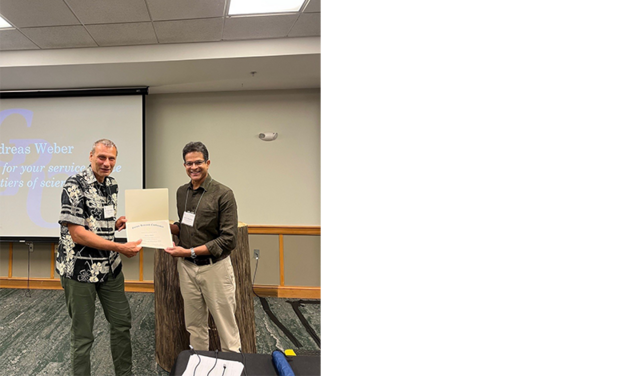
Vamsi Mootha, Vice Chair of the 2026 GRC and Chair of the 2028 GRC (right), recognizes 2026 Chair Andreas Weber by presenting him with a certificate. Photo and (c): Vamsi Mootha

Recent research developments and fundamental biological processes in energy-transducing organelles were discussed at the Gordon Research Conference (GRC) "Energy-Transducing Organelles at the Nexus of Evolutionary Biology and Synthetic Engineering" that was held from 19th to 24th July at the Jordan Hotel at Sunday River in Maine, USA. The conference was organized by conference chair Andreas Weber (Heinrich-Heine-University, Düsseldorf, Germany) and vice-chair Vamsi Mootha (Harvard Medical School, Boston, MA, USA). 118 researchers from five continents attended the conference, with more than 50% of the participants being early career researchers. Andreas Weber reports about the focus and recent developments across different scientific disciplines. 

Read more
Actualia (engl.) · Conference Report

Protein Termini 2026: From molecular mechanisms to biological impact

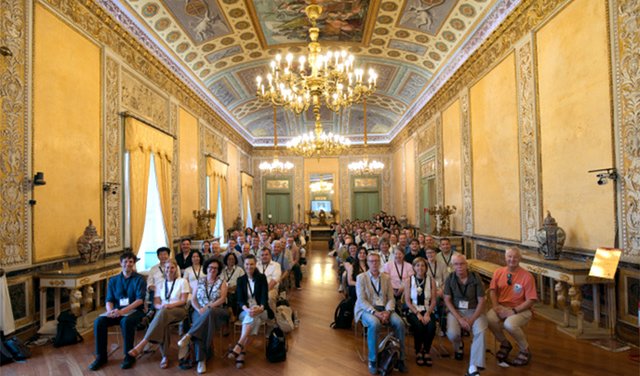
Participants of the FEBS Workshop Protein Termini 2026: From Mechanisms to Biological Impact in the Palazzo dei Normanni (Palazzo Reale), seat of the Sicilian Regional Assembly in Palermo. The meeting brought together 152 researchers from more than 20 countries and four continents. Photo: Angelo Modesto

What happens at the ends of proteins can determine their fate – but protein termini are increasingly emerging as much more than molecular tags for protein stability and degradation. At the FEBS (Federation of European Biochemical Societies) Workshop “Protein Termini 2026” in Italian Palermo, 152 scientists discussed how protein termini connect translation, protein maturation, proteostasis, signalling and stress responses with emerging therapeutic and biotechnological applications. Plant research is making fundamental contributions to this rapidly evolving field. Co-organiser Prof. Dr Nico Dissmeyer, reports about latest scientific developments and new perspectives. Several items on the agenda served as stepping stones for early career scientists (ECRs).

read more
Actualia (engl.) · Conference Report

Meeting of PhD students in evolutionary biology (EMPSEB)

Participants and organizers of EMPSEB31 in the German Oberwiesenthal. Photo: Erica Winslott

The meeting organised by PhD students for other PhD students in the fields of evolutionary biology with almost 80 participants offered all attendees the opportunity to present own research, try “alternative” presentation styles and to connect with people with similar research questions. Uliana Kolesnikova reports from the 31st meeting that has taken place from 8th to 12th June 2026. 

read more
DBG · Internat. Botanik-Tagung

Abstract submission for two poster types extended for our International Conference the Botanik-Tagung

The deadline is extended to submit your poster abstract to be presented at the International Conference of our German Society for Plant Sciences (DBG), the Botanik-Tagung (BT2026) taking place in Bochum, Germany, from 6th to 10th September 2026, in either one of the two possible types:

  • Abstracts to be considered for a poster talk can be submitted until 11th June, 23:59 Bochum-time (CEST). There will be five presentations in each of the 18 different Sessions (see overview: https://botanik-tagung.de/programme.html). Authors who wish to be considered for such a talk should tick the corresponding box during submission. 
  • Abstracts to be considered for poster presentation can be submitted until 3rd August.

Please note that presenting authors must register for the conference before submitting an abstract. We are looking forward to meeting you in Bochum. Around 600 scientists from all disciplines of plant science joined our last biennial conference in Halle, Germany. 

Submit your abstract today
Actualia (engl.) · DBG · Internat. Botanik-Tagung

DBG member assembly and board elections in September

DBG members are invited to take part in our upcoming assembly on Monday, 7th September 2026 at noon during the International Conference of our German Society for Plant Sciences, the Botanik-Tagung, at Bochum University (Hörsaalzentrum HZO, Universitätsstr. 150). All members have been invited via e-mail early in May by our Secretary General. In the meeting, new board members will be elected and a new statute will be agreed upon. Our current board members are looking forward to meeting you in Bochum. 

Download all agenda topics (German pdf file)

Agenda Topics
Actualia (engl.) · Conference Report

DBG’s HOT TOPIC Workshop on focused-ion-beam milling and cryo-electron tomography

Participants and organizers of the workshop in the entrance area of the Biozentrum. Photo: Yuval Milrad

DBG’s third Eduard Strasburger HOT TOPIC Workshop, this time on “Structural Biology – Visualization of the photosynthetic machinery via focused-ion-beam (FIB)-milling and Cryo-ET” took place from 13th to 15th April 2026 in the Biozentrum of the University of Basel, Switzerland. 11 PhD students and 12 PostDocs mainly from Germany but also from Switzerland experienced three intense days of teaching, experimenting and networking. The Organisers Dr Davide Tamborrini (Basel), Dr Karen Zinzius (Münster), and Fanny Le Blanc (Basel), report about microscopy techniques and challenges, data processing, three-dimensional animations, intensive discussions and in-depth dives into the topic. 

read more + more photos
Actualia (engl.)

Obituary: Prof. Widmar Tanner, PhD (1938–2026)

Prof. Widmar Tanner. Photo: private, courtesy of the Tanner family

At the end of April, our honorary member, the plant physiologist Prof. Dr. Widmar Tanner (University of Regensburg), passed away at the age of 87. Thanks to his enthusiasm for experimentation, his meticulousness and thirst for knowledge, as well as his ability to connect insights across disciplines, Widmar Tanner not only established new fields of research but also shaped numerous scientists who were later appointed to professorships. In his obituary, Prof. Dr. Ekkehard Neuhaus recounts the stages of the Regensburg researcher’s career, outlines the molecular processes that Widmar Tanner uncovered and brought to international prominence, and reflects on what made him such an inspiring conversational partner.

Read more
Actualia (engl.)

Obituary: Dr. Peter H. Raven (1936-2026)

Peter H. Raven. Photo: Kristi Foster. Courtesy Missouri Botanical Garden

Our honorary member, evolutionary and biodiversity scientist, Peter Hamilton Raven, has passed away on 25th April 2026 at the age of 89 (https://www.missouribotanicalgarden.org/peter-raven). Raven, the director of the Missouri Botanical Garden in St. Louis (Missouri, USA) for four decades, shaped our understanding in ecosystem interactions and biodiversity. He was one of the first to recognize that the loss of biodiversity is not merely an academic issue, and he therefore dedicated himself to its preservation. To do so, Raven combined taxonomy, evolutionary biology and conservation and conveyed science to the public. As researcher he analysed the evening primrose family (Onagraceae), the coevolution between plants and butterflies, and wrote the well-known textbook Biology of Plants. In the years in St. Louis, he transformed the respected but provincial garden to a recognized global hub for research, education, horticultural display, and sustainability, with far-reaching scientific partnerships and conservation programs. The TIME magazine once described him as a “Hero for our Planet”. 

DBG · Internat. Botanik-Tagung · Promoting young researchers

Early bird to register for BT2026 ends soon

If you want to profit from early bird rates to come together, discuss science, meet and exchange with other plant scientists and get to know the people behind the papers, hurry up to register for the International Conference of the German Society for Plant Sciences (DBG), the Botanik-Tagung (BT2026). Around 600 scientists joined our last conference in Halle in 2024. The cheaper rates are only available until 30th April 2026. Abstract submission deadline will be on 31st May 2026. More details - for example about the well-known keynote and session speakers are available on the conference website. Remember to register soon, if you want to save on early bird rates.  

see conference website
Actualia (engl.) · Conference Report

Advances in Molecular Plant Science at the MBP2026 Meeting in Hennef

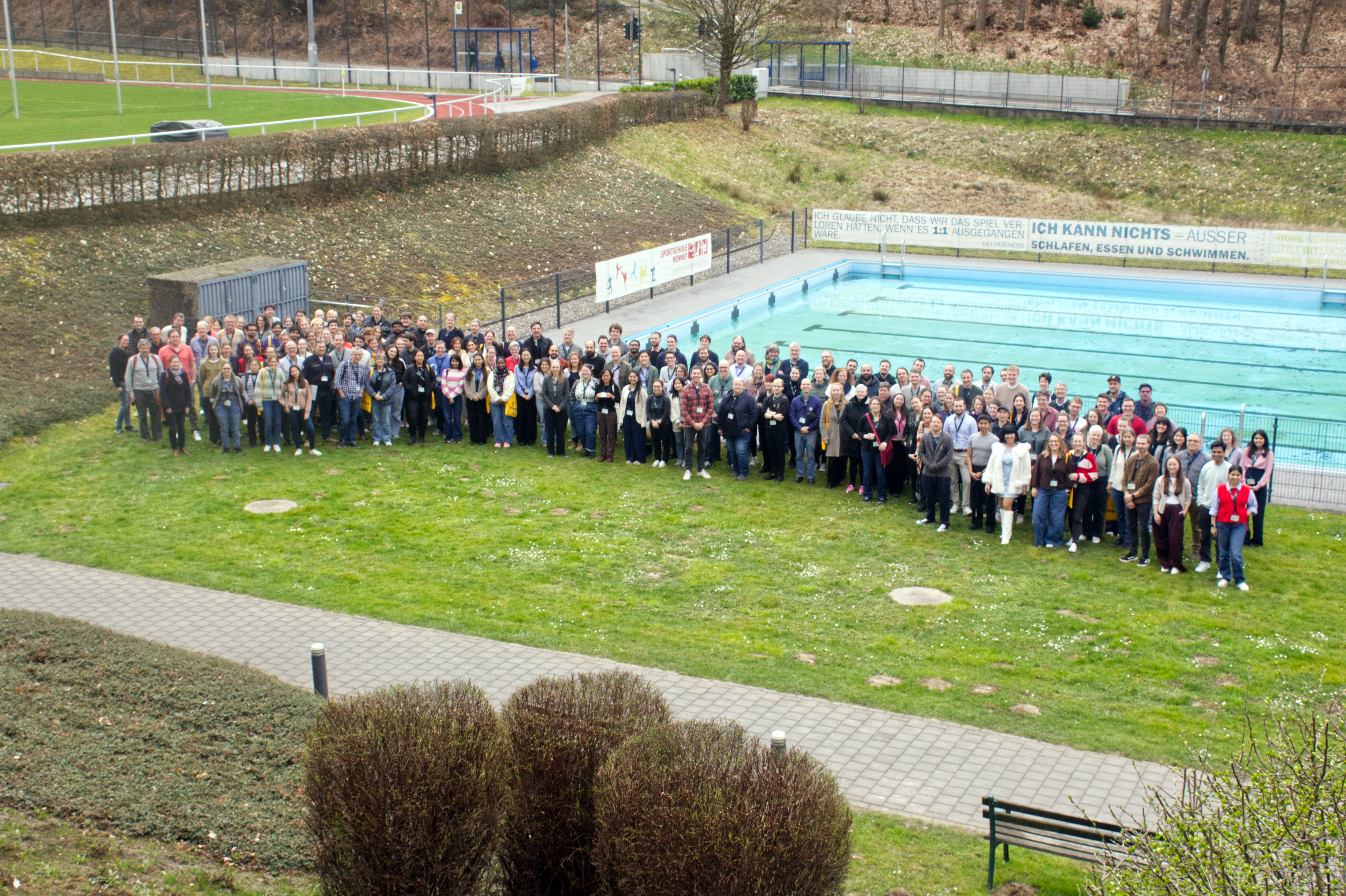
Participants of the 39th Molecular Biology of Plants Conference (MBP2026) at the Sportschule Hennef, Germany. Photo: Dr. José Manuel Ugalde

The 39th Molecular Biology of Plants Conference (MBP2026) of our Section Plant Physiology and Molecular Biology brought together leading scientists, early-career researchers, and industry representatives at the Sportschule Hennef from 16th to 19th March 2026. Held under the patronage of the DBG Section Plant Physiology and Molecular Biology (SPPMB), the meeting once again provided an inspiring platform for scientific exchange and networking within the international plant science community. Main conference organiser Hans-Henning Kunz (LMU Munich) summarises the meeting that he and his team organised together with Christopher Grefen (Ruhr University Bochum) and Andrea Bräutigam (Bielefeld University). He not only reports about current research areas and developments in molecular plant research, but also explains which early-career researchers (ECRs) were awarded with prizes. MBP2026 showcased the latest advances in molecular plant research and reflected the diversity, innovation, and collaborative spirit of the field.

read more + more photos
Call · Promoting young researchers

Deadline in sight: to nominate ECRs für our awards

Call closes on 26th April 2026 (12 p.m.).

Read more
Actualia (engl.)

Nachruf: Professor Dr. Philipp Franken (1960-2025)

Prof. Dr. Philipp Franken im Jahr 2011. Mit freundlicher Genehmigung des Leibniz-Instituts für Gemüse- und Zierpflanzenbau (IGZ) e.V. in Großbeeren

Das Team  unserer Zeitschrift Plant Biology trauert tief um seinen langjährigen und hochgeschätzten Kollegen Prof. Dr. Philipp Franken. Mit großer Bestürzung haben wir erfahren, dass er im Dezember nach schwerer Krankheit im Alter von nur 65 Jahren viel zu früh von uns gegangen ist. Editor in Chief, Prof. Dr. Christiane Werner (Freiburg) skizziert seine wissenschaftlichen Stationen und was Prof. Franken auszeichnete. 

Read more
Actualia (engl.) · Conference Report

68th Maize Genetics Meeting in Cologne, Germany

The 2026 maize meeting is about to begin in the grand ballroom of the Maritim hotel in Cologne. Photo: Frank Hocholdinger

From Thursday, February 26th to Sunday, March 1st, 2026, members of the international maize genetics community gathered at the Maritim Hotel in Cologne, Germany, for the 68th Annual Maize Genetics Meeting. The meeting was organized by Frank Hochholdinger (University of Bonn), who acted as chair and local host, along with the team from the maize genetics meeting steering committee. The maize meeting is one of the longest-running conferences in plant genetics and serves as a central forum for researchers working on the genetics of maize (Zea mays). The conference, which was also supported by our German Society for Plant Sciences (DBG), had taken place for the 5th time outside the United States and for the first time in Germany. It brought together 412 scientists from 26 countries to present and discuss recent advances in maize genetics. The program featured six invited plenary talks, 30 short talks and 30 poster lightening presentations. In two poster sessions, 273 posters were discussed, creating numerous opportunities for scientific exchange and networking within the community. 

Read more + more photos
Actualia (engl.) · Conference Report

24th Central German Plant Physiology Conference 2026

The participants of the 24th Central German Plant Physiology Conference 2026 in the atrium of the biology building of the Technische Universität Dresden. Foto: Freia Benade

The Central German Plant Physiology Conference, which brings together young scientists from four universities every year, took place for the 24th time, this year in Dresden as scheduled. In addition to providing a very important forum for presentations by early career scientists (ECRs), the conference also plays a major role in promoting general scientific exchange between neighbouring universities in the field of plant sciences. Approximately 50 participants registered with a total of 20 presentations, 15 of which were given by researchers ranging from bachelor's and master's students to doctoral candidates. Once again, the sessions were chaired by ECRs. For those, who have been participating for some time, the development of scientific projects over the years is exciting, and it is possible to follow the many advances in the particular topics. This conference is free of charge for participants, since DBG's financial support enabled us organisers to provide well-equipped coffee breaks and to provide financial support to seven actively participating students at the bachelor's or master's level as well.

The topics presented ranged from plant development to abiotic stress and biotic interactions, as well as several contributions dealing with method development. The latter inspired many participants with new ideas. Techniques included - in addition to physiology - biochemical, molecular and genetic methods. Overall, the diversity of topics and the quality of the presentations were highly praised. Since the presentations were almost exclusively given by ECRs, a great deal of data from as yet unpublished projects was presented. These were discussed in detail, with the many coffee breaks again being put to good use. The conference format, consisting of two half-days, proved successful once again, as discussions continued not only during the scientific programme and coffee breaks, but also during the joint dinner afterwards at a local brewery. Organiser Prof. Dr. Jutta Ludwig-Müller reports about the topics, new ideas and the focus of research.

Read more
Actualia (engl.) · Internat. Botanik-Tagung

Registration open: invitation to the international Botanik-Tagung (BT2026)

Please click to download conference poster (DIN A4). Graphic: Christopher Grefen and team

Prof. Dr. Christopher Grefen and his team invite you to this year's Botanik-Tagung, International Conference of the German Society for Plant Sciences to Bochum, Germany, from September 6 to 10, 2026. The conference motto, From Industrial Past to Green Future, highlights the structural change of the Ruhr area, from coal mining and heavy industries to the increasingly important issues of climate protection, sustainability, and preservation of biodiversity, with plant sciences at the forefront of this transformation. In nine plenary lectures, internationally renowned researchers will present their latest research findings. The invited guests will travel from Great Britain, the USA, Austria, Israel, and numerous research institutions in Germany, among other places. Eighteen thematic sessions and a public evening lecture will build the scientific framework of the conference. The program will be complemented by poster presentations, workshops, and extensive opportunities for professional exchange, which will offer early career researchers (ECRs) in particular the opportunity to get to know the people behind the papers. Registration is now open. 

Important dates are: 

  • Early-bird deadline: 30 April 2026
  • Standard registration: 1 May – 28 August 2026 (late/onsite fees apply thereafter)
  • Abstract submission deadline: 31 May 2026
  • Notification of acceptance: late June – early July 2026
To conference website
Actualia (engl.) · Internat. Botanik-Tagung · Promoting young researchers

60 travel grants for early-career researchers (ECRs)

Impression from the Botanik-Tagung 2024 in Halle, Germany, which was attended by more than 600 participants. Foto: esw

UPDATE 23rd March 2026: All Travel Grants have been assigned. 

In order to enable as many aspiring plant scientists as possible to participate, our DBG is awarding up to 60 travel grants for members, who come to our Botanik-Tagung, International Conference of the German Society for Plant Sciences, in Bochum (September 6 to 10, 2026) and present a poster or give an oral (short) presentation, each worth up to € 400 maximum for partial reimbursement conference fees, accommodation costs, or travel expenses. You are welcome to join our society prior to your application. The application form for the travel grants will be available starting 9th March 2026 (9:30 a.m.) in DBG`s intranet. The grants will be awarded after membership evaluation in the order in which applications are received. So, it pays to be quick.

Details on the intranet (prior member log-in required)

Intranet
Actualia (engl.) · Promoting young researchers

More than two dozen Master theses awarded

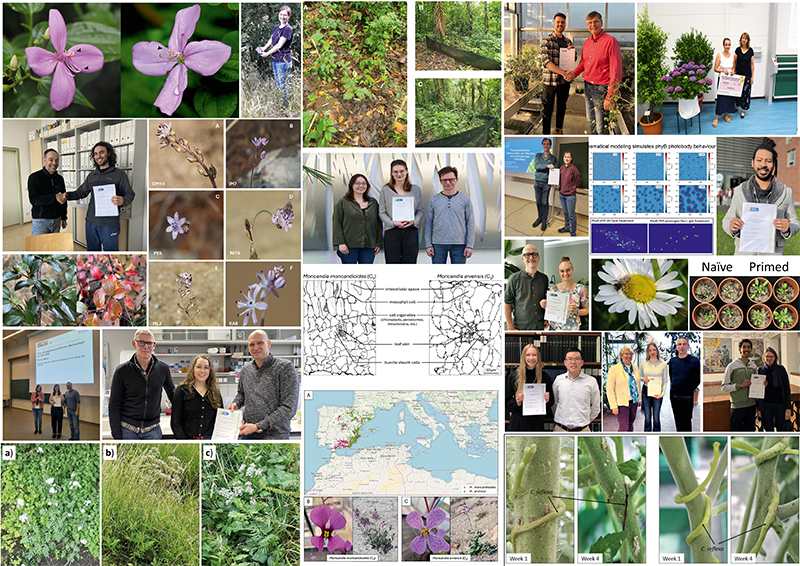
The awardees received certificates for their Master theses in the diverse plant science disciplines. Photos: awardees, laboratory colleagues and on-site contact persons at the universities

With 26 final theses in the plant sciences our DBG has awarded more early career plant scientists (ECRs) in the last year than ever before, since our German Society for Plant Sciences (DBG) first granted this master thesis prize at the participating universities in 2014. The topics of the theses stretched from ecology and questions of interactions with other organisms or the environment, (epi-)genetic regulation, morphological studies, enzyme reactions, protein chemistry, evolution, photosynthesis, biotic and abiotic stresses to the analysis of resistance in crops. Once again this demonstrates the diversity of the scientific disciplines that are represented in DBG. Our board especially thanks the on-site contact persons at the participating universities, who took over the sometimes not-so-easy selection process, thereby functioning as a jury.

Awarded people and master theses
Actualia (engl.) · Call · Promoting young researchers

Calls to nominate ECRs for three scientific awards

The nominations for DBG’s three prestigious awards for aspiring early career plant scientists (ECRs) are open now. DBG members and others, please nominate suitable candidates for the Eduard Strasburger Prize, the Wilhelm Pfeffer Prize and the Horst Wiehe Prize. Awardees will be invited to present their work orally at the next International Conference of our German Society for Plant Sciences, the Botanik-Tagung. Application deadline is 26th April 2026.

Summary table (pdf, in German)
Actualia (engl.) · Conference Report

First international Symposium on cereal stem cells and meristems

Some of the participants gathered for a group photo in front of the Vielberth building at the University of Regensburg. Photo: Ute Schäfers

The International Symposium on Cereal Meristems and Stem Cell Systems, organised by DFG Research Unit FOR235 Cereal Stem Cell Systems: Establishment, Maintenance and Termination (CSCS), brought together around 90 scientists from 14 countries at Regensburg University, Germany, from 28th of September to 1st of October 2025. The Symposium was the first international scientific conference that focused on the frontiers of plant stem cell and meristem science in cereals and other crops through the presentation of cutting-edge research.  The organisers around Prof. Dr Thomas Dresselhaus and Dr. Melanie Heinrich report about keynotes, awarded contributions of early career researchers (ECRs) and their hope that this meeting will prompt further conferences in this emerging scientific discipline.

Read more
Actualia (engl.)

Im Film Silent Friend verleitet ein Ginkgobaum zur Wahrnehmung von Pflanzen

Der Neurowissenschaftler, gespielt von Tony Leung, der eigentlich die kognitive Entwicklung von Babys erforscht, macht ein Experiment mit dem uralten Baum. Foto: Pandora-Film

Ein alter Ginkgobaum im Botanischen Garten Marburgs ist seit mehr als hundert Jahren stiller Zeuge leiser Veränderungen im Leben dreier Menschen: eines Neurowissenschaftlers im Jahr 2020, eines Studenten im Jahr 1972 und einer Studentin im Jahr 1908. Den wie Poesie erzählten Film, mit seinen detailreichen Pflanzenaufnahmen, Zeitrafferdarstellungen und mikroskopischen Aufnahmen aus Zellen kann die stellvertretende Sprecherin unserer Sektion für Angewandte Botanik, Prof. Dr. Jutta Papenbrock, auch anderen ans Herz legen. Sie hat den Film bereits gesehen, der aktuell von Pandora-Film an die lokalen Arthouse-Kinos verliehen wird. Die Pflanzenwissenschaftlerin hofft, dass die Pflanzenvielfalt und wissenschaftlichen Details dazu animieren, die Pflanzenwelt im täglichen Leben bewusster wahrzunehmen.

Read more