Genome restructured, evolution of land plants, arctic kelp forests and trees’ surfaces: awards for four plant scientists
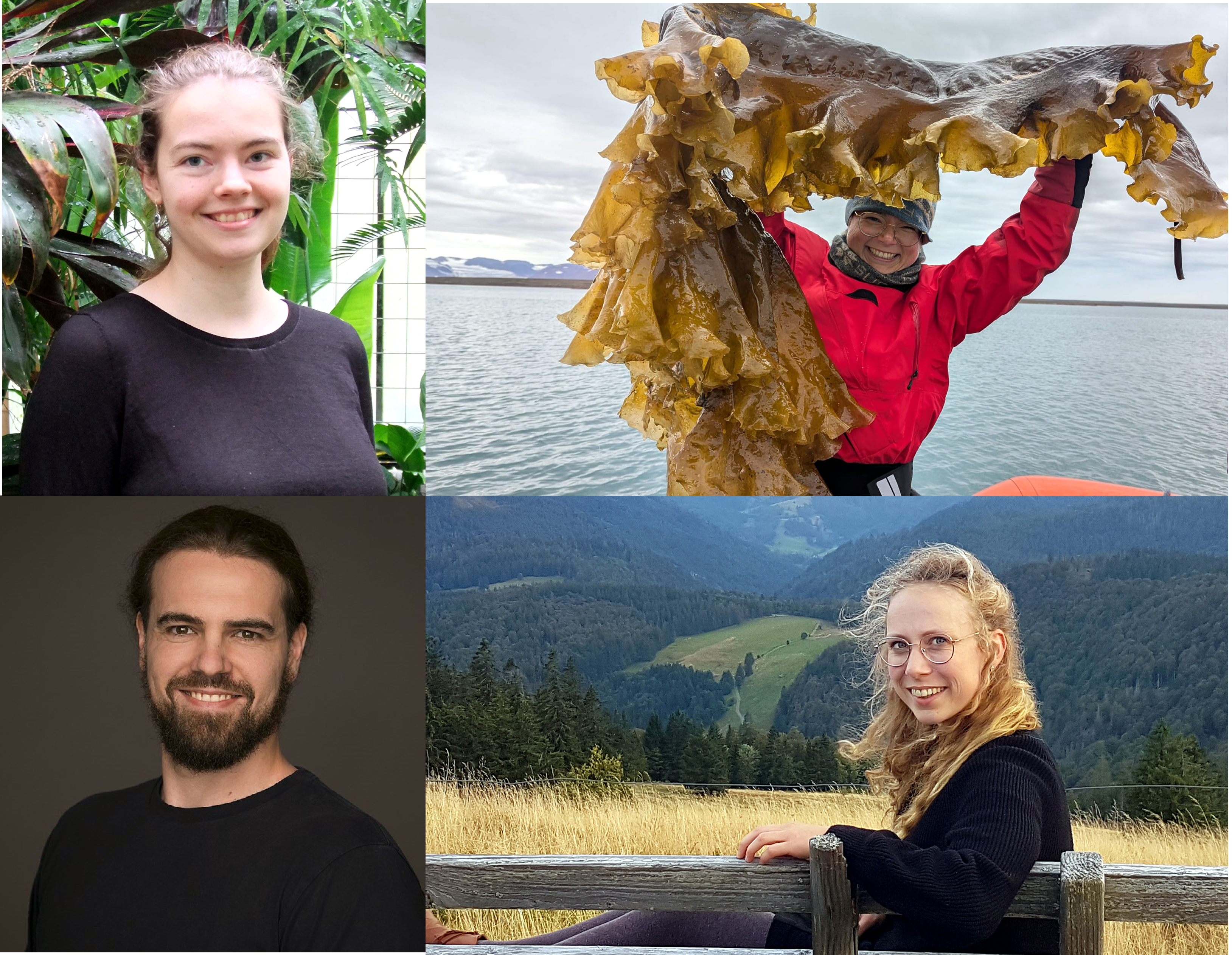 Dr Michelle Rönspies, Dr Sarina Niedzwiedz, Dr Jaccoline Zegers and Dr Paul David Grünhofer (clockwise, starting top left) receive this year‘s awards for excellent plant sciences. Photos and (c): Carina Jülch, Phoebe Armitage, Amra Ashok, private
The German Society for Plant Sciences (DBG) awards four early career scientists for their excellent research: Dr Michelle Rönspies reduced the number of chromosomes in plants for the first time. What plants were already capable of millions of years ago, has been shown by Dr Jaccoline Zegers. How climate change menaces arctic kelp forests was revealed by Dr Sarina Niedzwiedz. And Dr Paul Grünhofer has challenged long-standing assumptions about poplars’ protecting surfaces. They will receive the awards honouring their scientific findings on 9th September 2026, during the International Conference of the DBG at Ruhr University in Bochum, Germany. Three of the awardees will present their research results in a plenary lecture at DBG’s international conference, the Botanik-Tagung, where almost 500 plant scientists are expected to participate. But what exactly is the scientific excellence of the award-winning papers and theses?