
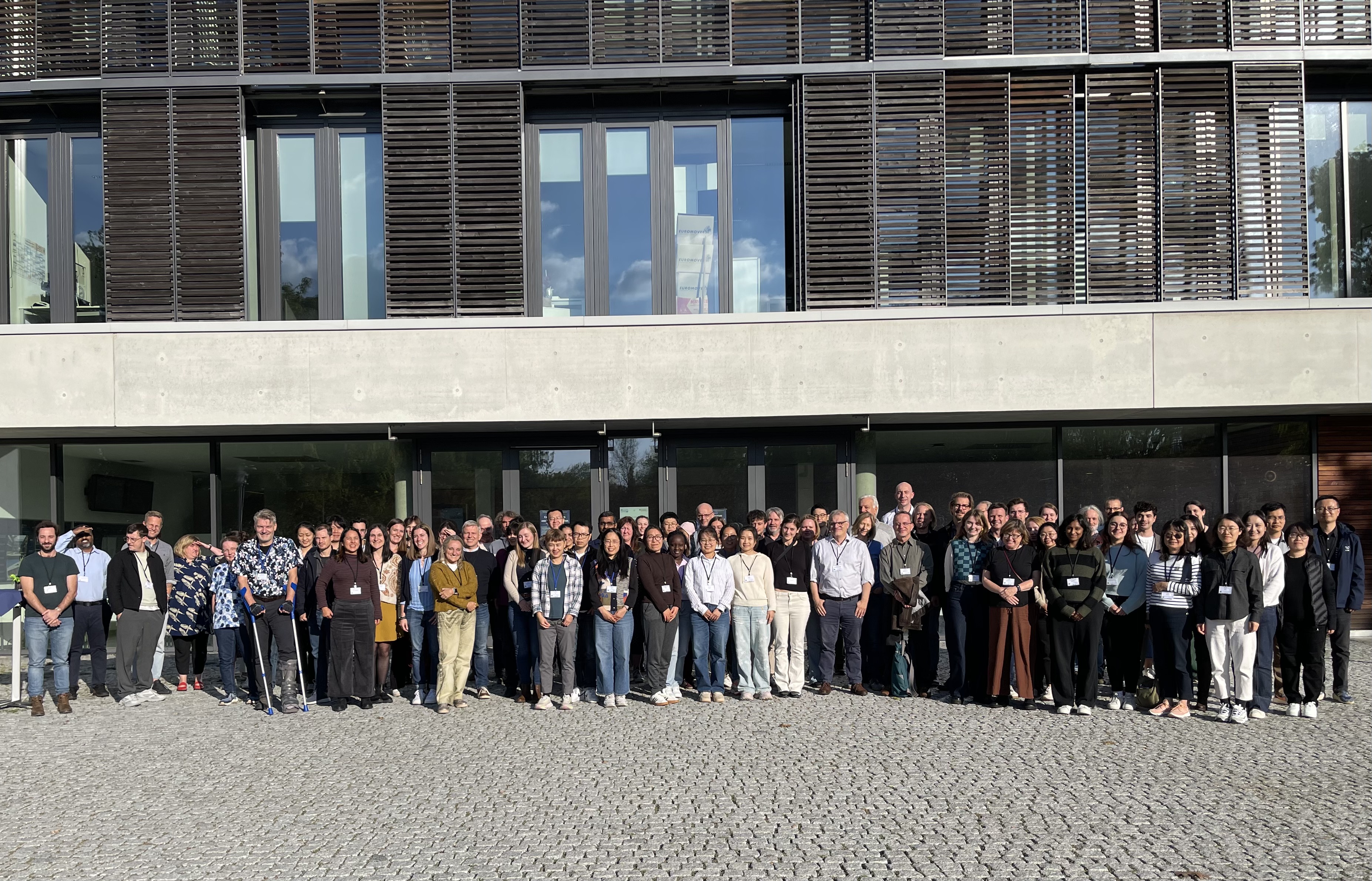


With twelve international keynote speakers invited, the local organiser and spokesperson for the CSCS Research Unit, Prof. Dr. Thomas Dresselhaus, welcomed a high-calibre selection of renowned plant scientists from Europe (Madelaine Bartlett, UK; Tom Beeckman, Belgium; Cristina Ferrandiz, Spain; Hilde Nelissen, Belgium; Annis Richardson, UK; Robert Sablowski, UK), Asia (Ikram Blilou, Saudi-Arabia; Yonghong Wang, China) and the USA (Andrea Gallavotti, David Jackson, Paula McSteen, Mike Scanlon). Thus, female speakers were in the majority among the invited speakers. The strong presence of women in plant meristem research is also reflected in the overall participant numbers, with women accounting for 56% of attendees.
During the four days of the conference participants discussed the current trends and achievements in in cereal meristem and stem cell research. The programme comprised a total of 40 presentations and additional posters. The topics covered ranged from the establishment of embryogenic meristems and the role of meristems in different parts of plants (shoots, roots, stems, inflorescences and flowers) to the effects of environmental stress on the activity of plant stem cell systems. In addition to the eudicot model plant Arabidopsis thaliana and the cereal model Brachypodium distachyon, the focus was primarily on crops such as maize, wheat, barley, rye, oats, rice and tomatoes.
Prizes and promotion of early career scientists
Thanks to the generous support of the German Society for Plant Sciences (DBG) the organisers were able to offer several PhD students free participation in the symposium. In addition, two early career researchers (ECRs) were awarded for the best poster and for the best oral presentation, respectively. The award for the best abstract talk went to Ella Penny (John Innes Centre, Norwick, UK) for an outstanding presentation entitled “Decoding wheat architecture: How meristem dynamics shape the inflorescence”. The best poster prize was awarded to Ludi Wang for her excellent poster showing the “Cellular and molecular mechanisms of pistil suppression in maize” (University of Cambridge, UK).
The CSCS2025 was characterised by cheerful and lively discussions, not only after the presentations, but also during the coffee breaks, the joint dinner and the time spent together, creating a warm and welcoming atmosphere filled with laughter and smiles. Thanks to the tireless work of the organisers, the enthusiasm of many helpers, the positive attitude of the participants and the generous financial contributions of our supporters, such as the German Society for Plant Sciences (DBG), the CSCS2025 was brought to a successful conclusion, and we hope that this conference will mark the start of a new series of conferences in cereal meristem research.
----
Prof. Dr. Thomas Dresselhaus and Dr. Melanie Heinrich, Regensburg University and DFG-Research Unit Cereal Stem Cell Systems