
From Sydney to Gatersleben: symposium gathers 20 countries
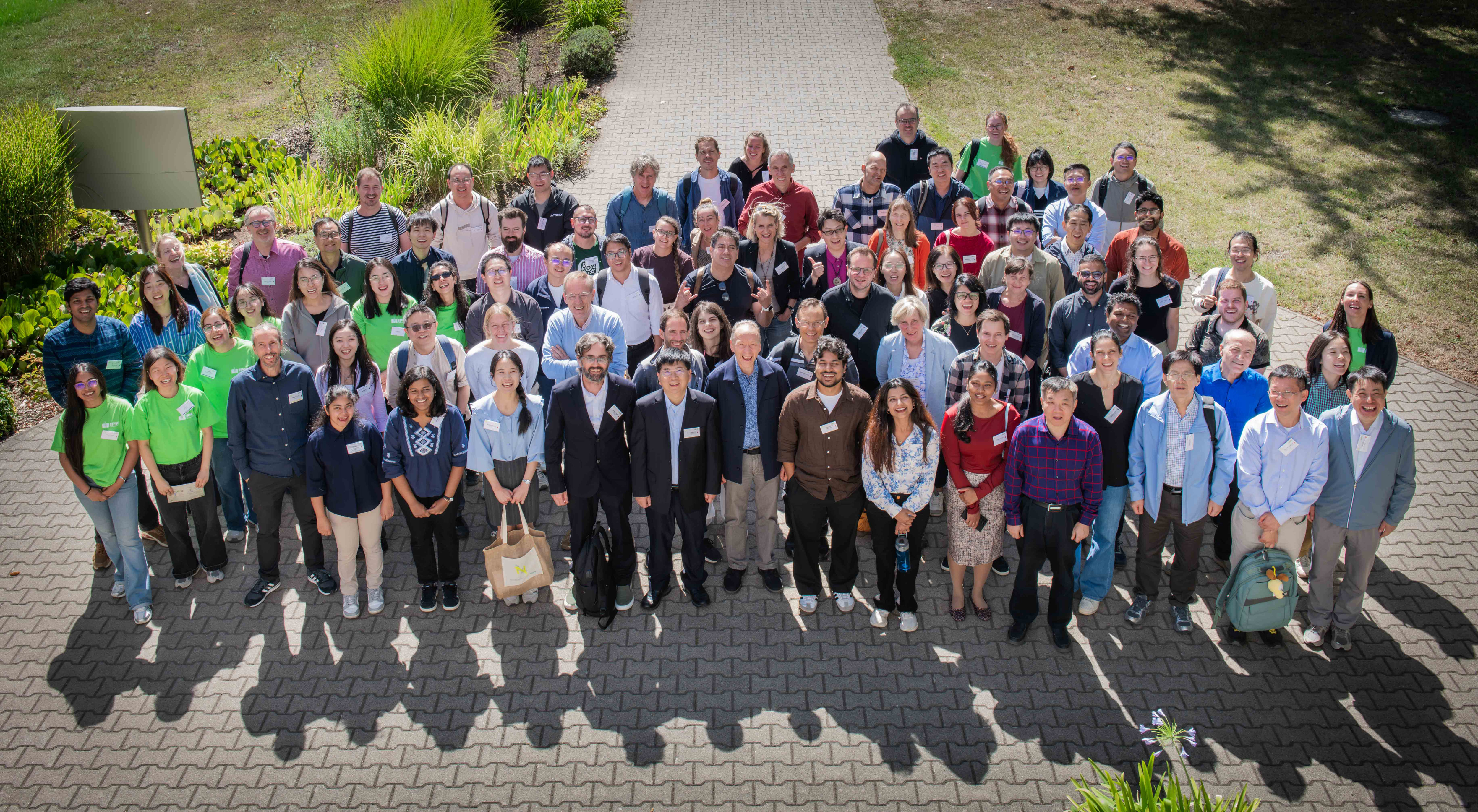
The 6th International Symposium on the Nitrogen Nutrition of Plants, Nitrogen 2026, from 23 to 27 August followed the previous one in Sydney 2023 and brought together nearly 100 researchers from 20 countries. Hosted by the Leibniz Institute of Plant Genetics and Crop Plant Research (IPK) in Gatersleben and organized by Ricardo Giehl, Hannah Schneider and Nicolaus von Wirén, the meeting offered an international scientific programme covering aspects from the molecular biology of nitrogen transport to crop genetics of nitrogen utilization.
A field connecting fundamental biology with a major societal challenge
The symposium began on Sunday evening at the Hotel Schlossmühle in Quedlinburg, where most participants were accommodated, with a keynote lecture by Wim de Vries from Wageningen University on nitrogen use efficiency in the food chain and reconciling nitrogen boundaries for food production and for securing air and water quality. From Monday to Thursday, participants travelled daily from Quedlinburg to the IPK to participate in a programme comprising 39 oral and 30 poster presentations, structured into seven thematic areas: nitrogen uptake mechanisms, nitrogen metabolism, nitrogen translocation and long-distance signaling, cellular nitrogen sensing, systems biology and AI in nitrogen regulation, nitrogen use efficiency and rhizosphere effects affecting nitrogen use efficiency.
Scientific highlights
Research conducted with the model species Arabidopsis provided novel insights into molecular mechanisms on the systemic regulation of nitrate transporters and their coupling with redox metabolism through glutaredoxins (ROXY proteins) that respond to shoot Nitrogen (N) saturation and cause downregulation of the high-affinity nitrate transporter NRT2.1. A particular focus was also set on the NLP family of cytosolic nitrate sensors that regulate N deficiency responses as well as nitrate responses via activation of different transcriptions factors (NIGTs and LBDs) and thereby influence both, nitrate transporters and root architectural changes.
Crop-related research in maize identified novel regulatory pathways, in which NPL3 can induce A- or B-type ARFs (auxin-response factors) in response to the plant N status to modulate cell wall biosynthesis. The majority of nitrogen use efficiency-related research has been conducted in rice, where the nitrate transceptor NRT1.1B coordinates nitrate with phosphate uptake and activates basal nitrogen-responsive pathways through NLP3. Intriguingly, NRT1.1B also integrates Abscisic acid (ABA) signalling, as ABA is induced under low N and binds directly to NRT1.1B to activate NLP4.
Particular impressive was the rapid progress made on the genetic improvement of nitrogen use efficiency in field-grown rice in China, where in particular the natural variation in N-inefficient japonica and N-efficiency indica rice has been used extensively to identify many regulatory gene variants that increase crop yield under moderate nitrogen fertilization regimes. In this regard, the great advantage pays out that China permits field trials with genome-edited and transgenic lines.
Making IPK’s research infrastructure visible
A particularly valuable part of the programme was the opportunity to experience the research environment at IPK first-hand. On Tuesday afternoon, participants took advantage of guided tours to the automated shoot and root phenotyping in IPK’s PhenoSphere, the Genebank, and the microphenomics and NMR facilities. For many participants, these tours provided a more tangible impression of how large-scale infrastructure, advanced imaging and analytical technologies support modern crop research.
Networking: Posters and social activities
The organisers also paid considerable attention to the informal side of scientific exchange. Two evening poster sessions gave early-career researchers and other participants dedicated opportunities to present and discuss their work. Accompanied either by finger food or a barbecue in the IPK’s garden, these lesser formal settings complemented the tightly scheduled scientific programme and provided opportunities for follow-up discussions and networking. The social programme extended to an afternoon trip to the historical sites of Quedlinburg or Wernigerode and concluded with a common conference dinner at the Hotel Schlossmühle in Quedlinburg.
Looking forward to next Nitrogen meeting
Praised by participants was in particular the familiar atmosphere that stimulated scientific exchange and the many opportunities that early career researchers allowed contacting highly reputed scientists. To follow up the rapid developments in this field, it was decided to hold the next Nitrogen symposium, in 2029 in Japan.