

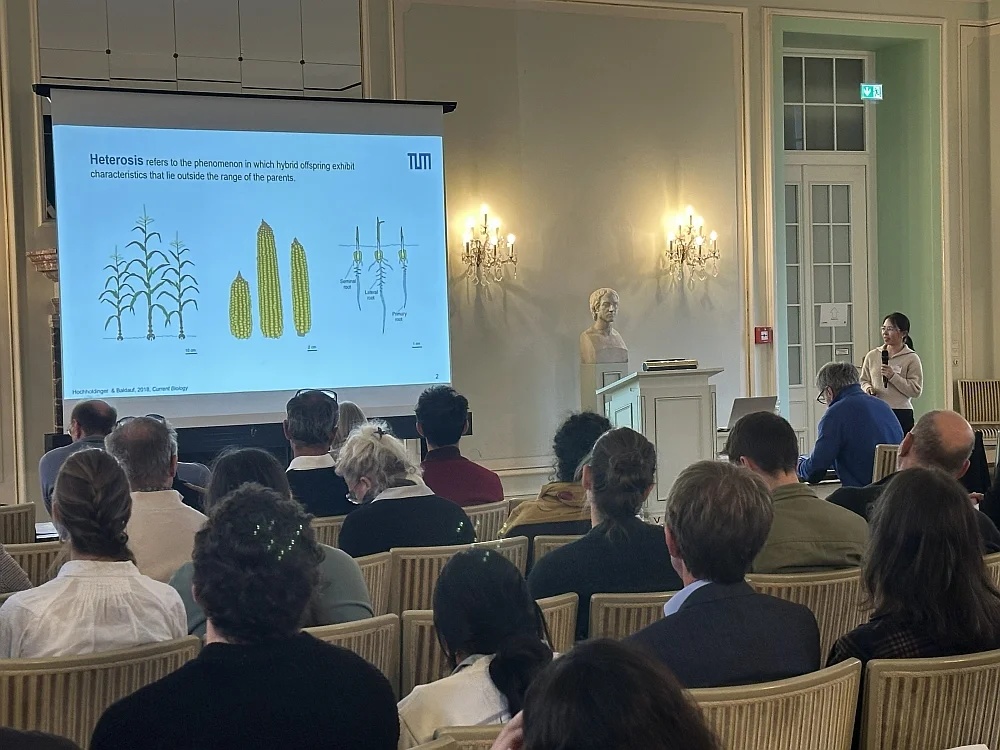
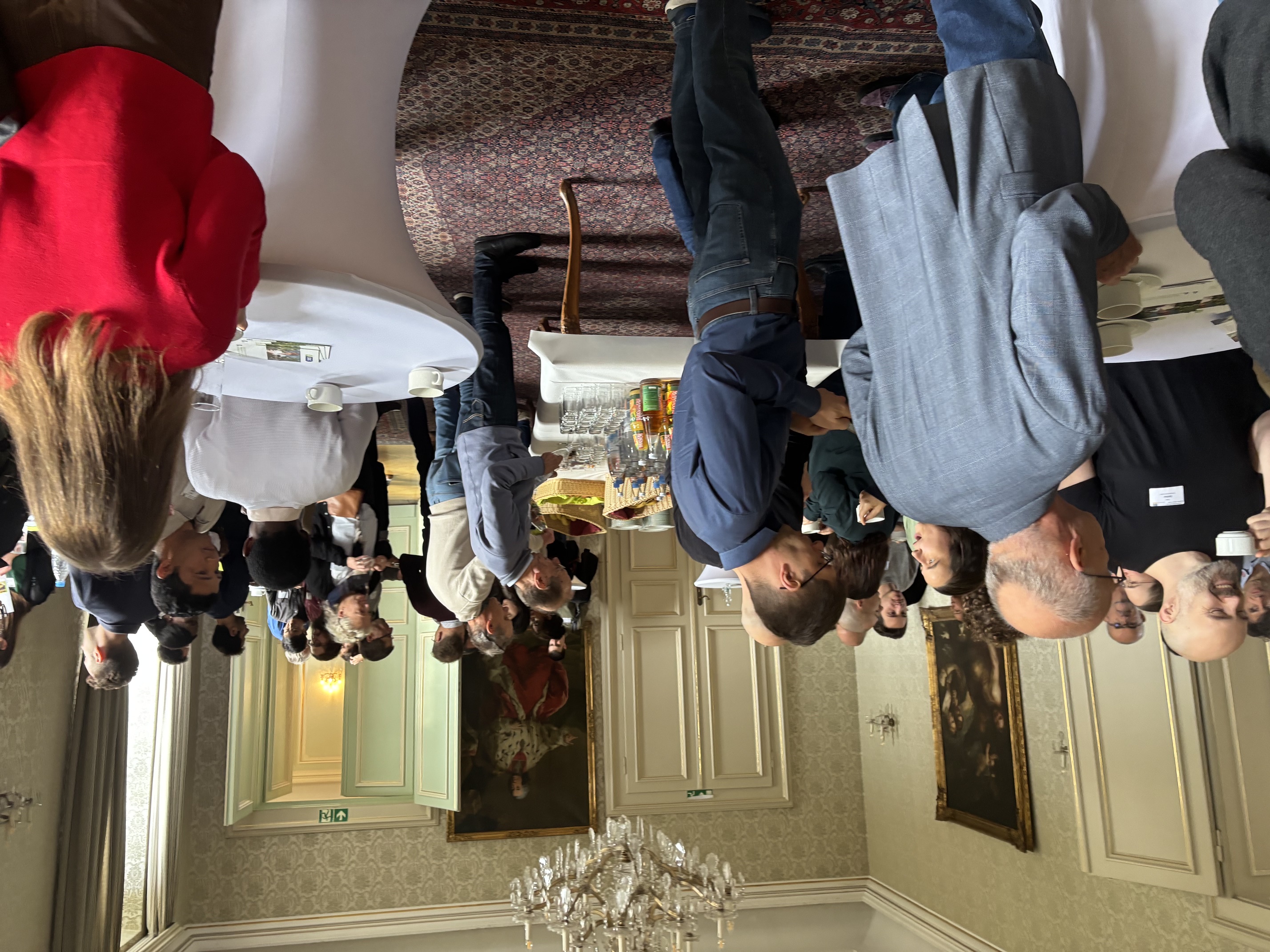
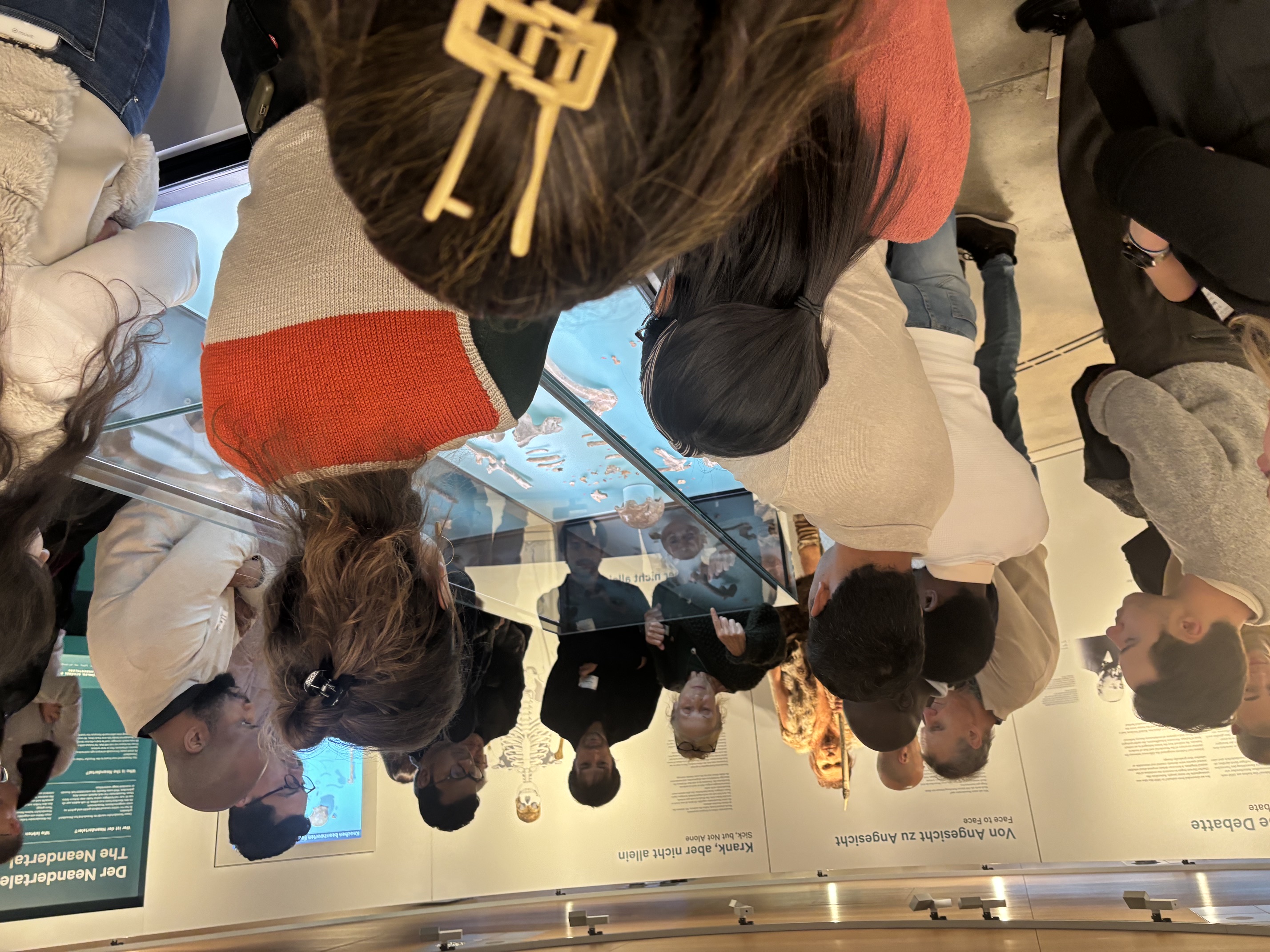
The program comprised four scientific sessions with 24 talks, split evenly between speakers from France and Germany. On the evening of the first day, participants enjoyed a conference dinner and a visit to the Neanderthal exhibition at the LVR-Landesmuseum Bonn.
Session’s topics
The first session explored how genomic and phenomic selection can modernize hybrid breeding, covering tester-free hybrid testing, multi-trait selection indices, portfolio-based hybrid positioning and multi-omics modelling of genotype-by-environment interactions. The second session focused on genetic diversity and breeding resources, with talks on landraces and genebank material, the genetic signatures of domestication and selection, lessons from forty years of maize breeding and the cellular basis of haploid induction. The third session addressed the molecular basis of heterosis, development and plant architecture, presenting haploid induction and heterosis through single-cell and epigenetic approaches, alongside leaf metabolism, meristem architecture and the effect of local homozygosity on hybrid performance. The fourth session dealt with root systems, nutrition and environmental resilience, including boron nutrition, root traits and hydraulics, mycorrhizal symbiosis and low-nitrogen response, reduced phosphorus fertilization, and the impact of climate change on maize development and corn smut infection.
Outlook
Funding by the German Society for Plant Sciences (DBG) was used to keep the registration for PhD students and postdoctoral researchers for this two-day event low (40 €/80 €). The 4th French-German Maize Breeders’ School will take place in 2029 in France.
----
Prof. Dr Frank Hochholdinger, University of Bonn, INRES - Crop Functional Genomics, https://www.inres.uni-bonn.de/cfg/en