Kathrin Mössler (Universität Salzburg)
Kathrin Mössler's Master thesis was awarded with the Prize for the Best Plant Science Master Thesis, which was carried out at University of Salzburg in the year 2026 with the title:
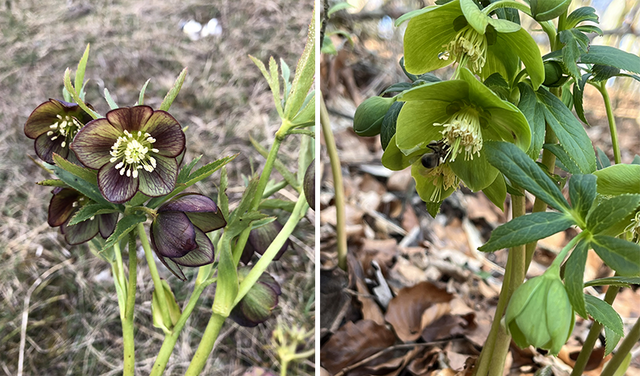
Phylogeography and Systematics of the Genus Helleborus L. (Ranunculaceae) with Emphasis on the Recently Radiated Section Helleborastrum
The thesis presents a time-calibrated phylogeny encompassing all taxa of the genus Helleborus, including the species and subspecies of the diverse sect. Helleborastrum, and discusses the evolutionary history of the genus, tracing its origins back to the Cretaceous–Paleogene boundary, in contrast to the recent, rapid radiation within sect. Helleborastrum over the past approximately 2 million years.
Little has been known about the phylogenetic relationships within the ornamental genus Helleborus and its intriguing geographic and evolutionary patterns, characterized by several deeply divergent species contrasting with the highly diverse sect. Helleborastrum, as well as a predominantly European and West Asian distribution with a single geographically isolated occurrence in East Asia.
This thesis is based on comprehensive sampling across the taxonomic and geographic range of the genus Helleborus, including relevant subspecies of sect. Helleborastrum. Carefully selected non-coding chloroplast DNA markers and nuclear ITS sequences were used for phylogenetic analyses (Maximum Likelihood, BEAST) and further evolutionary, diversification and phylogeographic analysis and an existing AFLP dataset covering sect. Helleborastrum (generated in 2008) was reanalyzed.
Our analyses suggest that the genus Helleborus may have originated around the Cretaceous–Paleogene boundary. An early split in the Tortonian (~8 Ma) provides some support for the proposed division into two subgenera (Werner and Ebel, 1994), while the deeply divergent lineages, mostly dating back to the Messinian, support the sectional classification of Mathew (1989). The analyses confirm a close relationship between the geographically isolated East Asian H. thibetanus and the diverse sect. Helleborastrum (distributed from the Caucasus to the Iberian Peninsula). Within this section, H. orientalis (Turkey, Caucasus) represents the earliest-diverging lineage, and analysis support a West Asian origin of the section. A recent, rapid radiation began approximately 2 million years ago, with most diversification occurring within the last million years, likely accompanied by repeated east-to-west range expansions across Europe.
This thesis establishes the first comprehensive phylogenetic framework for the genus Helleborus, providing new insights into the evolutionary relationships and biogeographic history of its major lineages and laying the groundwork for future research on the evolution, diversification, and taxonomy of the genus, as well as its application in ornamental breeding.
___
Kathrin Mössler conducted this work at the Botany institute in the working group of Andreas Tribsch, under the support and supervision of Andreas Tribsch and Matthias Affenzeller.