Marco Kopp (Christian-Albrechts-Universität zu Kiel)
Marco Kopp's Master thesis was awarded with the Prize for the Best Plant Science Master Thesis, which was carried out at Kiel University in the year 2026 with the title:
Establishment of a nuclei-isolation method based on Strep-tag affinity chromatography in Nicotiana benthamiana and Arabidopsis thaliana
The work demonstrates that plant nuclei covered with Strep-tag-containing fusion proteins could be used for the fast and easy isolation of nuclei, while additionally enabling their elution from Strep-Tactin-coated magnetic beads.
The nucleus acts as the headquarters of the cell, organizing a plethora of different tasks. An important tool for understanding this intricate organelle is the isolation of nuclei from plant tissue.
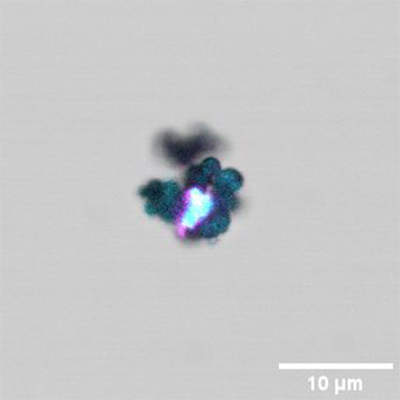
By fusing a Strep-tag and a fluorophore to different proteins of the outer nuclear membrane, nuclei are being covered with an affinity tag. After the lysis of cells from transformed A. thaliana and N. benthamiana plants, the tagged nuclei were incubated with Strep-Tactin-coated magnetic beads, enabling the interaction of the affinity pair and eventually the separation from the rest of the cellular debris.
Microscopic and Western blot analyses revealed an interaction between Strep-tagged nuclei and Strep-Tactin-coated magnetic beads only with WIP1S, a shortened version of the WPP domain interacting protein 1, tested in A. thaliana. However, the analyses also demonstrated that nuclei were lost during washing steps, indicating that the binding efficiency and strength of the interaction between the two partners could be improved. With the fusion proteins tested in N. benthamiana, no interaction between tagged nuclei and Strep-Tactin beads was observed.
The thesis demonstrates that the rapid and easy isolation of plant nuclei can be achieved by covering the outer nuclear membrane with Strep-tag fusion proteins. Nevertheless, further research needs to be done to improve the efficiency of the method.
___
Marco Kopp conducted this work at the Christian-Albrechts-Universität zu Kiel in the group of Prof. Dr. Jennifer Heiser.