
Pre-Conference tours and workshops
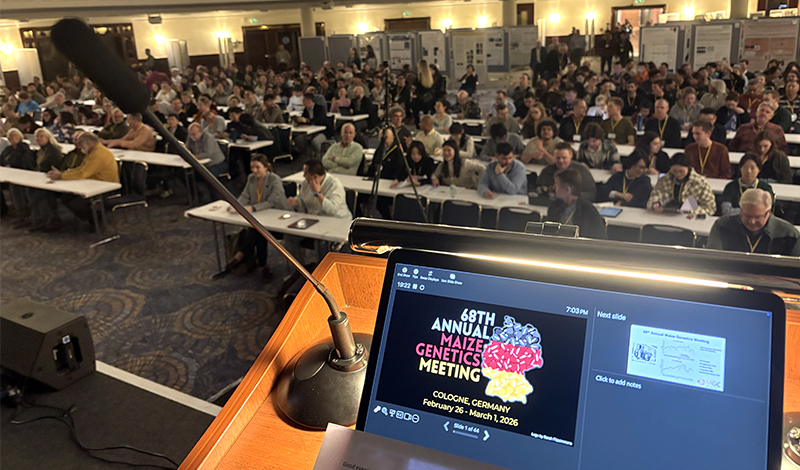
This year, three pre-conference workshops on Corn breeding research, Maize-microbe interactions and Development and cell biology were held prior to the meeting. In parallel, two pre-conference tours to the Juelich Plant Phenotyping facility and to the Bayer Crop Science hub in Monheim were offered to participants of the meeting.
Maize genomics
One of the major topics of this year's meeting was the rapid progress in maize genomics. New sequencing technologies and large-scale population datasets are enabling increasingly detailed insights into structural variation gene regulation, and the evolution of maize genomes. Several presentations highlighted the integration of genomic resources with functional studies to identify genes underlying agronomically important traits such as yield, stress tolerance, and nutrient use efficiency.
Maize development and genetic control
Another focus was the genetic control of maize development, including root architecture, meristem maintenance, leaf and kernel development. Talks on single-cell transcriptomics and spatial gene-expression profiling highlighted how developmental processes in maize tissues can now be resolved with unprecedented resolution. These techniques are helping to uncover new regulators of organ formation and developmental plasticity.
Quantitative genetics and opportunities for breeders
The meeting also showcased progress in quantitative genetics and breeding, with talks illustrating how genomic prediction, high-throughput phenotyping, and machine-learning approaches can accelerate crop improvement. These methods are increasingly used to understand genotype–environment interactions and to develop maize varieties better adapted to changing climates.
Maize, Drosophila and Arabidopsis
The plenary talks at the maize genetics meeting traditionally included speakers who highlight progress in maize genetics. This time Hilde Nelissen (VIB Ghent), Silvio Salvi (University of Bologna) and Arp Schnittger (University of Hamburg) talked about their work on maize. However, the maize meeting also always hosts plenary talks on the genetics of other model organisms. This year Eileen Furlong (EMBL Heidelberg) talked on Regulatory principles during embryonic development in Drosophila and Yoselin Benitez Alfonso (University of Leeds) talked in her plenary lecture about Dismantling walls and building bridges for communication where she highlighted her own work on cell wall biology in Arabidopsis but also her engagement in the Black in Plant Science network in the United Kingdom.
Prizes and awards for outstanding research
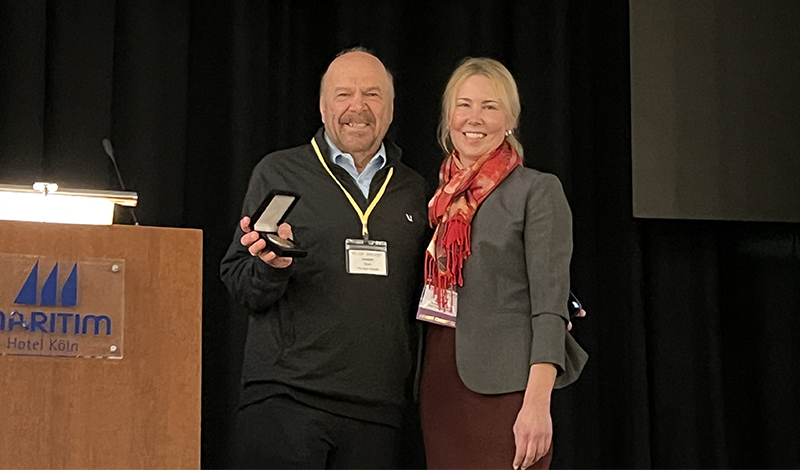
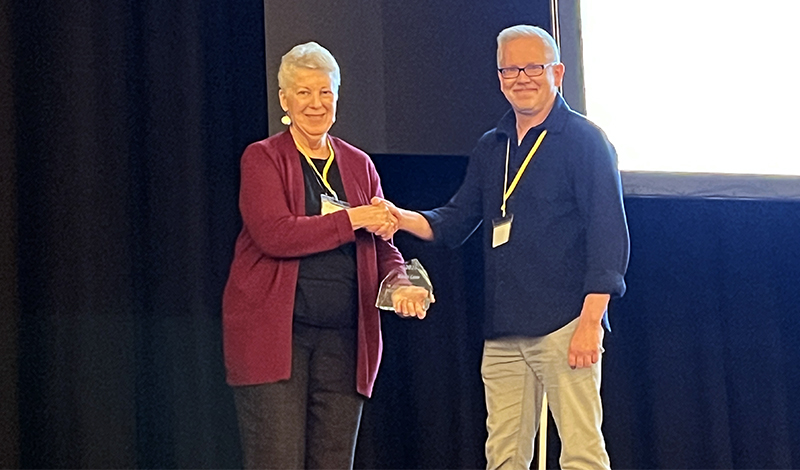
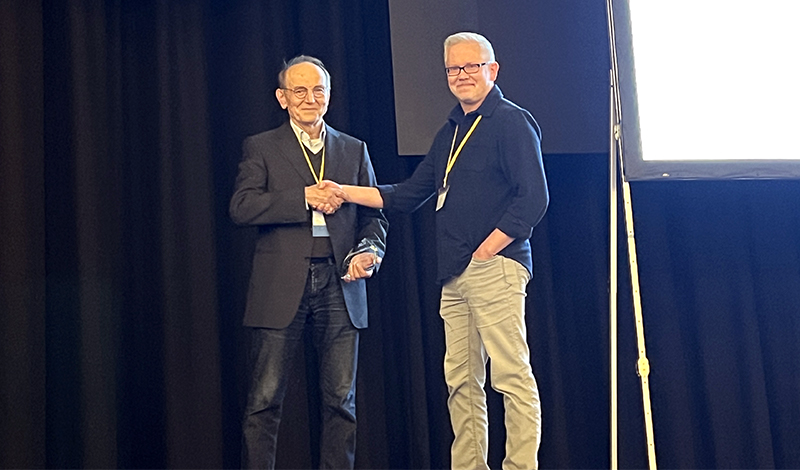
The Maize Genetics Cooperation also awards several prizes in different categories each year. This year the McClintock Prize for Plant Genetics and Genome Studies was awarded to Joe Ecker from the Salk Institute, San Diego. The McClintock prize recognizes the most outstanding plant scientists working on genetics and genomics in the present era. Joe gave an award presentation on Epigenomic diversity from plants to the nervous system. The Maize Genetics Cooperator Award went this year to Kan Wang (Iowa State University) for her pioneering work on maize transformation and her service to the maize community. Furthermore, the Maize Genetics Leadership Award, which is given to persons, who have inspired the lives and careers of other maize researchers, went to Thomas Slewinski of Bayer Crop Science. Moreover, the M. Rhoades Early-Career Maize Genetics Award was won by Addie Thompson (Michigan State University) and the L. Stadler Mid-Career Maize Genetics Awards went to Candice Hirsch (University of Minnesota). Last but not least the R. Emerson Lifetime Maize Genetics Award, which recognizes extraordinary lifetime achievements in maize genetics, and is awarded to persons, who made seminal contributions to the understanding of maize genetics, went to Karen Cone (National Science Foundation) and Albrecht Melchinger (University of Hohenheim).
Support of early career scientists and next meeting
As in previous years, the conference strongly supported early-career scientists, who contributed a large number of oral and poster presentations. Several travel programs and mentoring initiatives facilitated the participation of students and early-career researchers and fostered interactions with established scientists in the field. The Maize Genetics Cooperation covered the hotel costs for all 118 graduate and undergraduate students who attended the conference. The 69th Annual Maize Genetics Meeting will return to the USA and be held in Chicago in 2027, continuing the long-standing tradition of bringing together the global maize research community.