
Mapping Organellar Protein Complexes
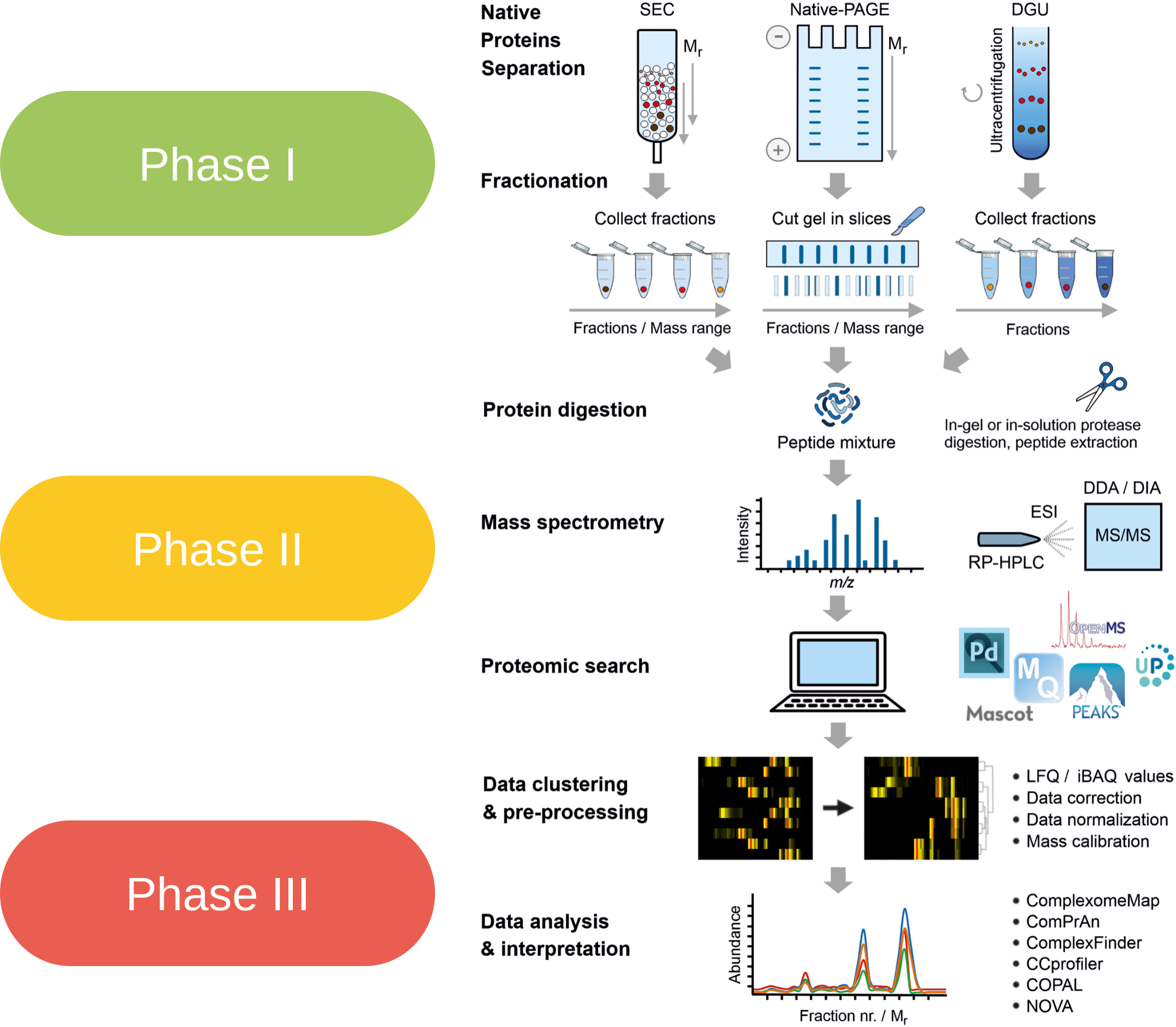
Key functions in plant cells rely on protein complexes, such as the photosystems in chloroplasts and the respiratory chain complexes in mitochondria. Complexome profiling (CP) has become the established method for analysing their composition, assembly, and stability: tissue is homogenized, specific subcellular fractions are enriched, and - after mild solubilization - protein complexes are separated by size under native conditions using density gradient centrifugation, chromatography, or Blue Native Polyacrylamide Gel Electrophoresis (BN-PAGE). Separated protein fractions are collected. Subsequently, quantitative mass spectrometry is used to generate abundance profiles for proteins across the fractions. By clustering similar profiles, known and novel protein complexes, their assembly intermediates, as well as their belonging to high-molecular supercomplexes can be defined and characterized.
Bridging the Gap: From Sample Preparation to Data Analysis
The numerous requests for collaboration received by our research group highlight the widespread interest in the CP approach. However, a key limitation of the approach is the requirement for fresh, intact material to preserve the fragile protein:protein interaction of interest. This constrains the transport of biological samples to central facilities for extraction and mass-spectrometric analysis. The Eduard Strasburger Workshop “Complexome Profiling in Plants: Exploring Organellar Protein Networks” addressed this limitation by equipping participants with the skills required to perform native separation and sample stabilization on site (Phase I, Figure 1), and to independently process and interpret the resulting complexome data (Phase III, Figure 1). This concept decouples sample preparation and data evaluation from the central mass spectrometry step (Phase II, Figure 1), granting researchers complete autonomy in experimental design and analysis.
Practical Workflow: From Organelle Isolation to Sample Stabilization
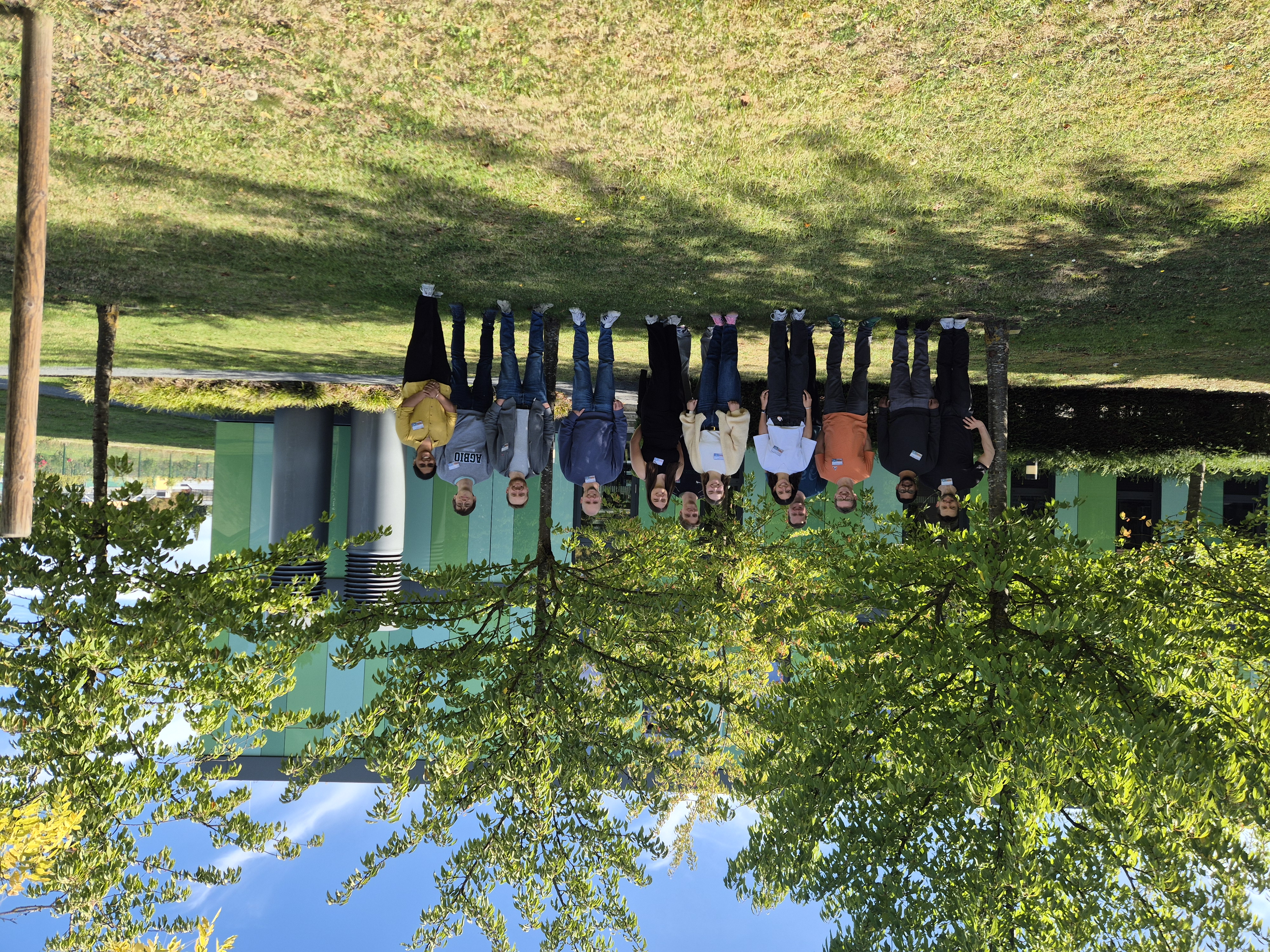

Nine early-career researchers (ERCs) from various universities across Germany participated in the three-day workshop (Figure 2). The meeting was free of charge for ECRs thanks to generous funding by the German Society for Plant Sciences (DBG). The practical part started with a hands-on session in the lab including the isolation of mitochondria from plant tissue, protein extraction, and the native separation of intact protein complexes via BN-PAGE (Figure 3). To round off this long first day in the lab, the group gathered for a shared pizza dinner, fostering networking and informal exchanges in a relaxed atmosphere.
The practical session continued the following day, focusing on the steps required to generate high-resolution complexome profiling samples from the BN gels. In this context, the importance of fraction number and consistent slice thickness for dataset resolution - as well as practical strategies to achieve this - was highlighted. The subsequent stabilization of protein samples for transfer to the MS facility marked the successful conclusion of the workshop's wet-lab part.
Keynote & Introduction to Proteomic Data Complexity
Before moving to the theoretical session focusing on Phase III of the CP workflow, Dr. Etienne Meyer (Martin Luther University Halle-Wittenberg) delivered an inspiring keynote lecture on analyzing protein complex assembly and how complexome profiling can empower such investigations. In his presentation, he also addressed the inherent challenges of complexome profiling. Furthermore, he provided valuable guidance on evaluating whether a full-scale CP experiment is necessary or if targeted approaches are sufficient for a given research question.
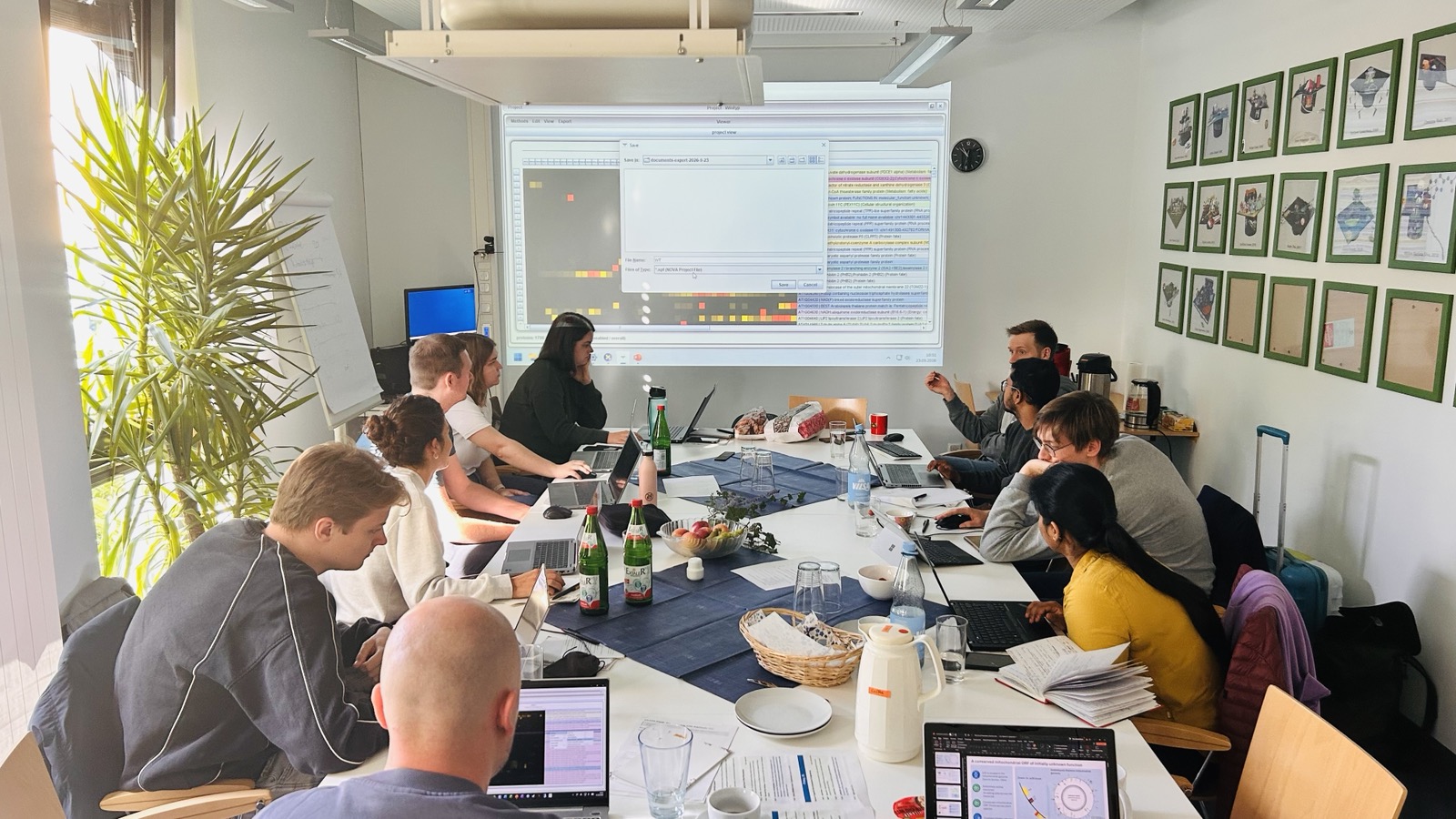
Well supplied with coffee and refreshments, the participants were ready for the theoretical session focusing on the processing and interpretation of complexome profiling data (Figure 4). The session opened with a discussion on identifying the key components of high-dimensionality MS proteomics data essential for complexome profiling analysis. Several participants directly echoed this challenge, confirming that the sheer volume and complexity of raw mass spectrometry datasets often leave researchers feeling overwhelmed when attempting their first CP evaluations. Afterwards, everyone wrapped up the day with a dinner together with Etienne Meyer and fruitful discussions.
Hands-on Data Evaluation & Tool Exploration
Building on these foundational concepts, the third and final day of the workshop was dedicated to hands-on data mining. Participants put theory into practice by searching for protein complexes in provided benchmark datasets. The organizers presented a wide variety of tools and, to the delight of many participants, announced that all of the tools are available free of charge.
Overall, the workshop received overwhelmingly positive feedback from all attendees. The participants particularly appreciated the small group size and the extensive hands-on opportunities, which allowed everyone to execute each step themselves while leaving ample time to address even the most detailed individual questions. Beyond mastering the core methodology, many participants emphasized gaining valuable insights and new ideas for their own experimental designs past complexome profiling. Given this encouraging response, the organizers are currently considering offering a future iteration of the workshop.
---
Hannover in October 2026, Dr. Nils Rugen and Matthias Döring https://www.genetik.uni-hannover.de/en/research/sections/plant-proteomics/plant-organellar-rna-editing