
Background and purpose
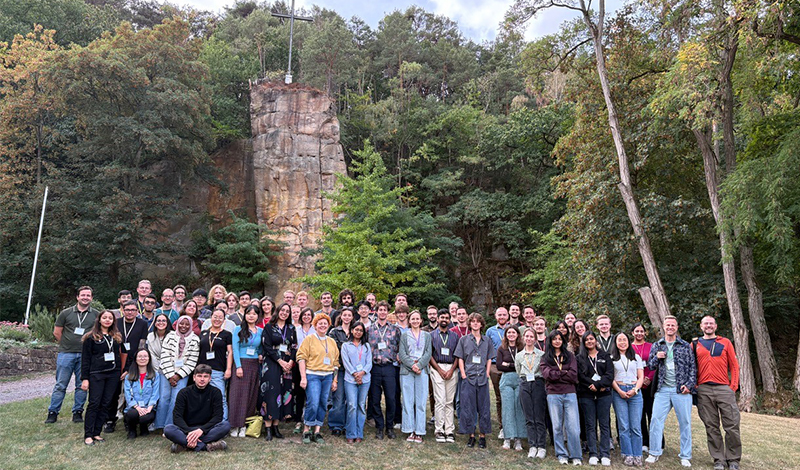
Since 2008, the PhD School has given young scientists a forum to present their work, exchange ideas and meet leading researchers in plant development in an informal, inclusive and supportive setting. Plant developmental biology is advancing rapidly, driven by progress in sequencing, single-cell technologies, gene editing, imaging and modelling. The school aims to connect the next generation of researchers working at this frontier.
Programme
Attendance was limited to 45 participants to preserve the intimate character of the meeting, and registration was fully booked and the sizeable waiting list indicated that this PhD school remained popular.
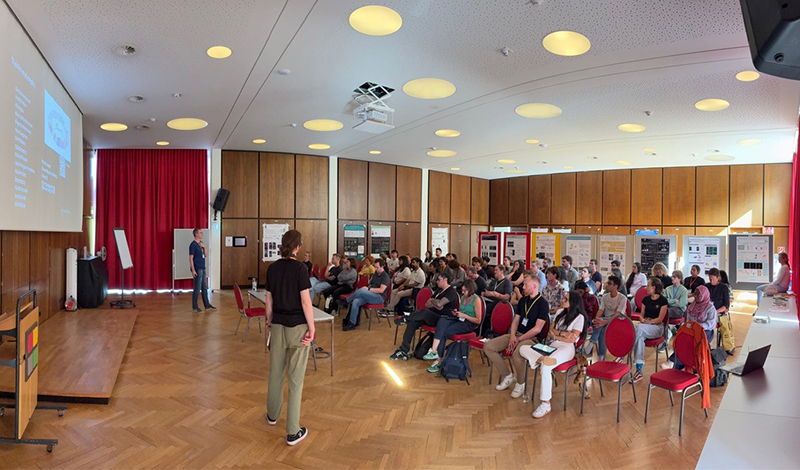
Each scientific session was opened by an internationally recognised keynote speaker, followed by two short talks selected from submitted abstracts. Early-career scientists acted as session chairs, and two poster sessions provided further opportunities for informal discussion. Each poster was presented in a flash talk session.
The program comprised 11 thematic sessions
- root development (Bert De Rybel, VIB Ghent)
- shoot and leaf development (Chris Whitewoods, JIC)
- reproductive development I (Andre Marques, MPI Cologne)
- reproductive development II (Sara Simonini, University of Zurich)
- evolutionary development (Isabel Monte, ZMBP Tübingen)
- developmental mechanisms (Charlotte Kirchhelle, ENS Lyon)
- development and environment (Marie Barberon, University of Geneva)
- development and defence (Yan Ma, GMI Vienna)
- crop development (Sebastian Soyk, University of Lausanne)
- developmental plasticity (Charles Melnyk, SLU Uppsala)
- career development, with representatives from industry and administration
Highlights
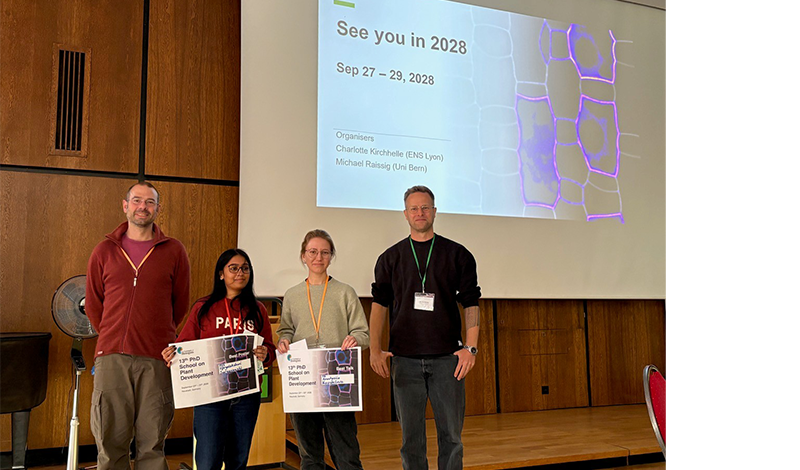
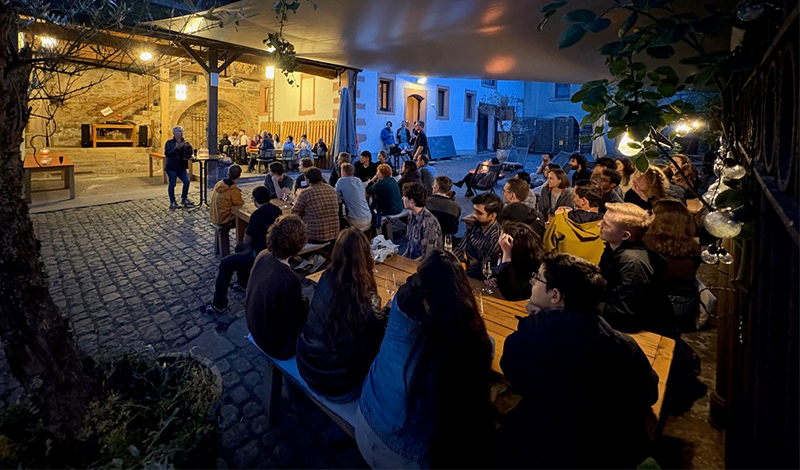
Participants and organizers described the talks as outstanding, and the community as warm, engaged and collaborative. Kloster Neustadt provided a beautiful setting for the meeting. A dinner and wine tasting at a local winery gave attendees the chance to continue scientific conversations in a relaxed atmosphere, which is often where new collaborations and friendships begin. The prize for the best talk went to Anastasiia Korosteleva (University of Bern) and for the best poster to Vijayalakshmi Suryavanshi (ZMBP Tübingen)
Value for early-career researchers
Small, focused meetings like this are rare. They give doctoral students and early postdocs hands-on experience in presenting their data, chairing sessions and building networks with peers and senior scientists. By keeping the registration fee low (€350, covering accommodation, meals and the social event), the school remains accessible to young researchers from across Europe. This was made possible by the support of academic – for example from the German Society for Plant Sciences (DBG) - and industrial sponsors.
Outlook
This meeting will be organized again in 2028 by Charlotte Kirchhelle (ENS Lyon) and Michael Raissig (University of Bern).
-----
Prof. Dr. Michael Raissig, University of Bern, Institute of Plant Sciences, Plant Genetics and Development, Bern, Switzerland